

Building well developed pectoralis major muscles (pecs) is a primary goal for many lifters. Despite the popularity of chest training through movements like the bench press and push-up, many individuals struggle with complete chest development. Common issues include a lack of upper chest fill, poorly defined lower chest fibers, or insufficient overall muscle mass.
The primary cause of poor chest development is sub-optimal exercise selection. To solve this, you must understand pec anatomy, regional subdivisions, biomechanical functions across movement planes, and how to apply these mechanics to compound exercises.
Want to take your training up a notch?
Use promo code SAVE10 to get 10% off any program right now. https://citizenathletics.com
Learn more about our training at the bottom.
Anatomy and Subdivisions of the Pectoralis Major
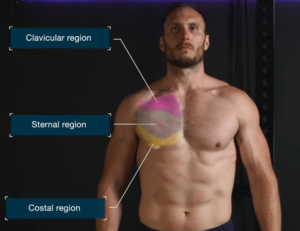
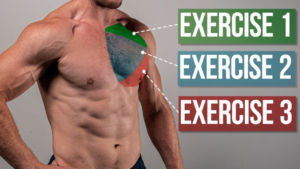
The pectoralis major is one of the largest muscle groups in the upper body. While it is commonly simplified into upper and lower regions, anatomical evidence demonstrates that the pecs consist of three distinct subdivisions:
- Clavicular Region (Upper Pec): Originates at the collarbone and runs diagonally downwards toward the shoulder.
- Sternal Region (Mid Pec): Originates along the sternum and passes horizontally toward the shoulder.
- Costal Region (Lower Pec): Originates on the ribs and passes diagonally upwards toward the shoulder.
All three subdivisions cross the shoulder joint and insert together on the lateral lip of the bicipital groove of the humerus.
Biomechanical Functions Across Movement Planes
Because the three subdivisions follow different directional paths, they contribute differently depending on the joint action and angle of movement.
Primary Collective Functions
Across all three heads, the pecs collectively perform two primary movements:
- Shoulder Horizontal Adduction: Bringing the arm toward the centerline of the body in the transverse plane.
- Shoulder Internal Rotation: Rotating the upper arm inward toward the body.
Regional Movement Contributions
In addition to horizontal adduction and internal rotation, individual regions contribute to specific joint actions:
- Clavicular Region: Assists in shoulder flexion and shoulder abduction.
- Sternal Region: Assists in shoulder flexion and shoulder adduction.
- Costal Region: Assists in shoulder extension and shoulder adduction.
Optimizing Mechanical Advantage by Range of Motion
To select exercises that maximally target the pecs over secondary muscles, consider when the pecs maintain the highest relative contribution:
- Shoulder Flexion (e.g., Narrow Grip Bench Press vs. Straight Press): The pecs (specifically clavicular and sternal heads) contribute alongside the anterior and middle deltoids. The pecs have their highest relative contribution at lower angles of shoulder flexion. Consequently, a narrow grip bench press provides a higher relative pec challenge than a straight overhead press.
- Shoulder Extension (e.g., Pullovers): The lats, posterior deltoid, teres major, and costal pecs contribute to extension. Unlike flexion, the costal pecs are most active at higher ranges of shoulder extension. Exercises with peak resistance near the top range, such as pullovers, maximize relative costal pec loading.
- Frontal Plane Actions (Abduction & Adduction): The clavicular head contributes to abduction at high ranges, while sternal and costal heads contribute to adduction at mid-ranges (45–60 degrees). However, these are secondary movements rather than primary drivers for pec growth.
- Transverse Plane Actions (Horizontal Adduction): This is the primary driver of chest activation. The anterior deltoid exhibits its peak moment arm when the arm is horizontally extended (reached back). Conversely, the pecs reach their peak moment arm around 45 degrees from the centerline. Exercises that deliver peak challenge closer to the midline focus greater tension on the pecs rather than the anterior deltoid.
Optimizing Staple Compound Movements for Pec Growth
Compound exercises like the bench press and push-up form the core foundation of effective chest training. Modifying technical execution allows you to shift tension to specific pec regions.
1. Barbell and Dumbbell Bench Press
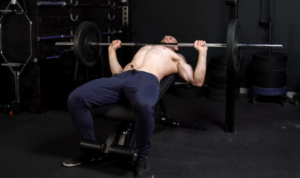
Research by Akagi et al. and Ogasawara et al. demonstrates a strong correlation between bench press strength and overall pec muscle size. While many assume the bench press omits upper chest engagement, research confirms it effectively stimulates all three regional subdivisions.
Barbell vs. Dumbbell Bench Press
Research does not support the common claim that dumbbell pressing is superior to barbell pressing for chest growth. Studies show that barbell and dumbbell bench presses produce equal muscle activation, or the barbell press proves superior. The enhanced stability of the barbell allows for greater absolute loading and output without requiring significant energy to stabilize the weight. Using both variations provides optimal training stimulus.
Modifying Bench Press Technique for Regional Targeting
- Adjusting Body Angle:
- Incline (15° to 45°): Shifts loading to the clavicular head by increasing shoulder flexion demands. Setting the bench at the lower end of this spectrum (15° to 30° or one notch up) is ideal. At 30° or higher, anterior deltoid activation increases significantly while sternal and costal involvement decreases.
- Decline: Applying a subtle decline angle shifts mechanical emphasis to the costal pecs.
- Adjusting Grip Width and Style:
- Narrow Grip: Emphasizes shoulder flexion, increasing target engagement on the clavicular head.
- Reverse Grip: Prioritizes the shoulder flexion path. Research indicates reverse-grip pressing can produce higher activation amplitude in the upper pecs.
- Wide Grip: Shifts torque demand away from the triceps and anterior deltoid, placing greater emphasis across the pecs overall.
- Integrating Accommodating Resistance:
- Adding resistance bands or chains increases load toward the top range of motion (closer to midline), directly matching the peak moment arm of the pecs. Bands can be wrapped under the bench or anchored to heavy dumbbells.
Note: Angle, grip, and accommodating resistance modifications apply equally to dumbbell bench pressing.
2. Progressive Push-Up Variations
Research demonstrates that push-ups deliver muscle size and strength gains extremely similar to the bench press, provided they are progressively overloaded.
Methods to Overload Push-Ups
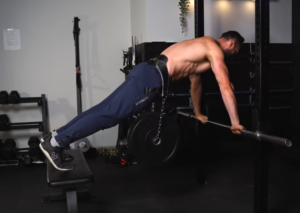
- Weight Plates: Placing a plate on the upper back works effectively for moderate loads.
- Dip Belt in Rack Setup: Setting a barbell in a rack aligned with a bench permits the use of a dip belt, allowing heavy loading with multiple plates.
- Band Resistance: Wrapping a band around the upper back increases resistance toward full extension. Studies show band-resisted push-ups are as effective as the barbell bench press when systematically overloaded.
Targeting Specific Pec Regions with Push-Up Variations
- Pike Push-Ups: Performed off parallettes with feet elevated to target the clavicular head.
- Narrow Hand Placement: Emphasizes the upper pec.
- Diamond Hand Placement: Maximizes total involvement across the pecs overall.
- Underhand Grip Push-Ups: Increases focus on upper pec fibers.
- Rotating Push-Ups: Rotating the torso away from the working side at the bottom maximizes deep pec stretch; rotating back toward the side during lockout increases horizontal adduction. Combining rotation with band resistance provides high stretch at the bottom and maximum squeeze at the top.
3. Dips
The dip is a classic calisthenics movement for chest development. Mechanical principles, such as body angle adjustments, grip modifications, and accommodating resistance, apply to dips similarly to bench pressing and push-ups.

Programming Takeaways
- Prioritize Compounds: Heavy, progressively overloaded compound movements (bench press, push-ups, and dips) should make up the majority of your chest training volume.
- Match Leverage to Target Regions: Adjust bench angles (15°–30° incline for upper chest), grip width, and hand orientation to bias specific subdivisions.
- Match Load to Mechanical Advantage: Utilize accommodating resistance (bands/chains) to maximize resistance near the midline where the pecs have the greatest mechanical advantage.
Take Your Training to the Next Level
Looking to build a science-backed, progressive training routine tailored to your physical goals? Citizen Athletics and optimize your strength, hypertrophy, and performance today.
- Built for Athletics: Our premium training system engineered to optimize raw strength, power, and high-level movement efficiency.
- Sustainable Strength: The ultimate flagship framework designed for busy individuals looking to lift heavy, build muscle, and remain highly athletic for life.
Watch the Full Scientific Breakdown
Want a visual walk-through of the biomechanics, exercise setups, and execution cues covered in this article? Watch the full video breakdown here.