

Many lifters struggle to build their hamstrings effectively. A primary reason is exercise selection, choosing movements that only minimally engage the hamstrings rather than those that maximize development. Furthermore, even when effective exercises are selected, execution errors often reduce the stimulus.
To optimize hamstring strength and hypertrophy, training must be grounded in anatomy, biomechanical function, the length-tension relationship, and practical application.
Want to take your training up a notch?
Use promo code SAVE10 to get 10% off any program right now. https://citizenathletics.com
Learn more about our training at the bottom.
1. Hamstring Anatomy
The hamstrings consist of three distinct muscles, one of which contains two heads:
- Medial Hamstrings:
- Semimembranosus
- Semitendinosus
- Lateral Hamstrings:
- Biceps Femoris (Long Head)
- Biceps Femoris (Short Head)
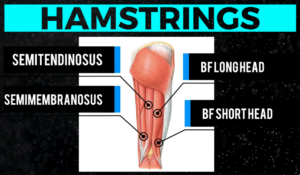
Origins and Insertions
- Pelvic Origin: The semimembranosus, semitendinosus, and the long head of the biceps femoris all originate on the ischial tuberosity of the pelvis. They cross the hip joint and run down the femur.
- Femoral Origin: The short head of the biceps femoris originates directly on the backside of the femur.
- Medial Insertion: The semimembranosus and semitendinosus cross the knee joint medially to insert on the medial portion of the tibia.
- Lateral Insertion: Both the long and short heads of the biceps femoris cross the knee joint laterally to insert on the lateral portion of the tibia and fibula.
2. Biomechanical Function and Foot Position
Although typically treated as a single unit, the hamstrings functionally divide into medial and lateral groups.
Primary Biomechanical Actions
- Knee Flexion: All hamstring muscles flex the knee joint.
- Hip Extension: All hamstring muscles except the short head of the biceps femoris extend the hip.
- Internal Rotation: The medial hamstrings internally rotate the lower leg (when the knee is flexed) and internally rotate the hip.
- External Rotation: The lateral hamstrings externally rotate the lower leg (when the knee is flexed) and externally rotate the hip.
Foot Position and EMG Activation
Research demonstrates that foot orientation during exercises like leg curls and stiff-legged deadlifts alters hamstring muscle activation patterns:
- Toes Rotated Out (External Rotation): Increases activation preference toward the biceps femoris (lateral hamstrings).
- Toes Rotated In (Internal Rotation): Increases activation preference toward the semitendinosus and semimembranosus (medial hamstrings).
3. Proximal vs. Distal Subdivisions and Contraction Speed
The hamstring muscles feature distinct proximal (near the hip) and distal (near the knee) subdivisions, which respond differently depending on movement type, contraction speed, and joint angle.
- Hip Extension vs. Knee Flexion:
- Proximal Subdivisions: Experience higher stimulation during hip extension-based exercises.
- Distal Subdivisions: Experience higher stimulation during knee flexion-based exercises.
- Contraction Velocity:
- Higher contraction speeds preferentially recruit the distal regions.
- This is evident in sprinters, who typically display significantly enhanced distal hamstring development due to high-velocity contractions.
4. The Length-Tension Relationship: Why Squats Fail to Build Hamstrings
Because most hamstring muscles cross both the hip and knee joints, joint angles dictate muscle length:
- Knee Joint: Extending the knee lengthens the hamstrings; flexing the knee shortens them.
- Hip Joint: Flexing the hip lengthens the hamstrings; extending the hip shortens them.
Why Squats Are Ineffective for Hamstring Hypertrophy
During a squat, as you lower down, hip flexion (which lengthens the hamstrings at the hip) occurs simultaneously with knee flexion (which shortens the hamstrings at the knee). Upon rising, hip extension (shortening) occurs simultaneously with knee extension (lengthening).
Because the muscle length barely changes throughout the movement, the hamstrings cannot produce significant force or experience a stretch under load. Consequently, squats yield minimal hamstring hypertrophy. Optimal hamstring training requires isolating knee flexion or hip extension.
5. Research on Muscle Length: Seated vs. Lying Leg Curls
Recent evidence emphasizes the role of training hamstrings at longer muscle lengths:
- Yanagisawa (2020): Demonstrated that training hamstrings at longer muscle lengths leads to higher overall hamstring muscle activation.
- For hip extension, longer length is achieved with the knee extended.
- For knee flexion, longer length is achieved with the hip flexed.
- Maeo et al. (2020): A 12-week study compared seated leg curls (hip flexed / long muscle length) against lying leg curls (hip extended / short muscle length).
- Results: Seated leg curls produced significantly greater hypertrophy and strength gains across all hamstring muscles except the short head of the biceps femoris.
- Mechanism: Because the short head of the biceps femoris does not cross the hip, altering hip position does not affect its operating length.
Practical Takeaway: While short muscle length training remains viable, exercises that target hamstrings at longer muscle lengths generally yield superior overall long-term hypertrophy.
6. Practical Application: Knee Flexion Variations
When selecting knee flexion exercises, prioritize options that maintain a flexed hip position when possible.
Hip-Flexed Knee Flexion Options
- Seated Leg Curl Machine: The primary exercise option for training knee flexion at a long muscle length.
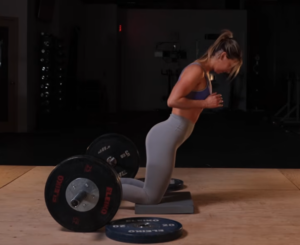
- Glute-Ham Raise (GHR) with Flexed Hips: Execute on a GHD by keeping the hips in a relatively flexed angle and loading appropriately.
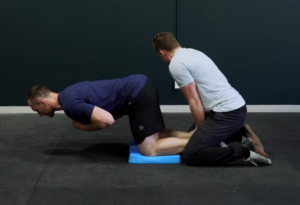
- Razor Curl: Performed on the floor with feet anchored. Control out and back, using your hands to assist as needed to maintain smooth tension.
- Hip-Flexed Band/Cable Curls:
- Seated on a Box: Anchor a band or cable column in front and pull inward (can be difficult to stay anchored).
- Lying on Floor: Anchor a band overhead, lie back, and pull down toward the heels using hands for positional support.
Hip-Extended / Non-Flexed Knee Flexion Options
If hip-flexed setups are unavailable or lack adequate tension, use hip-extended variations:
- Nordic Curls
- Standard Glute-Ham Raises (GHR)
- Standing or Lying Band / Cable Leg Curls
Key Execution Rules for Knee Flexion
- Maintain Hip Angle: Avoid extending or aggressively flexing the hip mid-rep to compensate for fatigue.
- Avoid “Butt Shoot”: In movements like glute-ham raises or lying leg curls, raising the hips during the movement combines knee flexion with hip movement, reducing tension on the hamstrings.
- Stance / Foot Adjustments: Rotate toes inward to bias the medial hamstrings or outward for the lateral hamstrings based on personal development or sport-specific demands.
7. Practical Application: Hip Extension Variations
For hip extension exercises, keep the knee relatively extended or nearly extended to maximize hamstring stretch and load.
Top Hip Extension Exercises
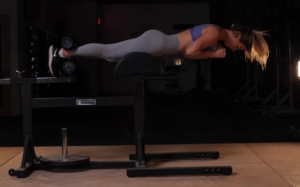
- Back Extensions (45° or Horizontal):
- Performed on a GHD or Roman chair.
- Alternative Setup: Set up a barbell in a rack with hips or feet supported, or anchor hips on a flat bench.
- Single-Leg Variations: Highly effective for increasing overload without extra axial weight.
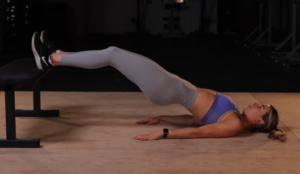
- Long-Lever Bridges:
- Perform hip extension with knees nearly extended.
- Elevating the foot on a bench or box increases effective range of motion. Can be performed bilaterally or unilaterally.
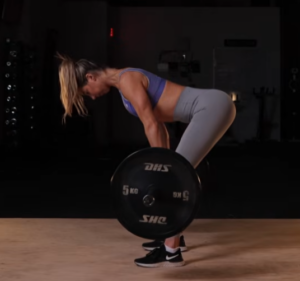
- Barbell Hinges (RDLs & Stiff-Legged Deadlifts):
- Highly validated in research for high hamstring activation.
- Can be performed on a single leg to increase relative loading per hamstring.
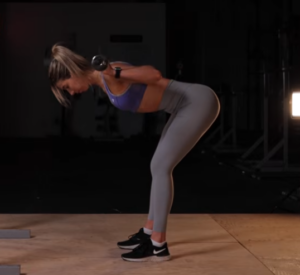
- Good Mornings:
- Unlike a squat, movement occurs strictly at the hips with a slight bend in the knees to allow the hips to shift backward.
- Execution Cue: Do not simply bend forward at the lower back. Shift the hips back during the descent to transfer load from the lower back directly into the hamstrings.
Foot Orientation in Hip Extension
As with knee flexion, adjust toe orientation (toes straight, turned in, or turned out) across hip extension movements to target specific hamstring heads.
8. Conclusion and Programming Summary
While individual equipment access and goals prevent a single universal program, exercise selection should adhere to clear criteria:
- Single Best Overall Exercise: If restricted to one exercise, the Seated Leg Curl with toes forward offers stability, targets the hamstrings at a long muscle length, and provides balanced stimulation to both medial and lateral heads.
- General Selection Strategy:
- Choose movements that can be loaded heavily and progressively overloaded over time.
- Prioritize options that work the hamstrings at long muscle lengths.
- Include at least one knee flexion variation and at least one hip extension variation within your routine for full proximal and distal development.
Take Your Training Further
Building a resilient, high-performing physique requires science-backed programming that cuts through the noise. Explore our structured, evidence-based strength and conditioning programs at Citizen Athletics to optimize your performance and hyper-target your goals.
- Built for Athletics: Our premium training system engineered to optimize raw strength, power, and high-level movement efficiency.
- Sustainable Strength: The ultimate flagship framework designed for busy individuals looking to lift heavy, build muscle, and remain highly athletic for life.
Watch the Full Scientific Breakdown
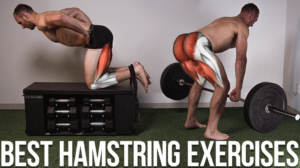
Want to see these biomechanical concepts and exercise executions in action? Check out our complete video breakdown here.