


Transitioning from heavy strength sports to middle-distance running presents a unique physiological challenge, especially when carrying significant mass. Moving heavy loads requires explosive force production, high motor unit recruitment, and maximal strength, whereas running a competitive mile demands aerobic capacity, sustained speed endurance, and tissue tolerance to ground reaction forces.
Here is the exact framework, progression, and training timeline used to cut a mile time from over 8:00 down to sub-6:00 (mid-5s) at 231 pounds in under 10 months.
Want to take your training up a notch?
Use promo code SAVE10 to get 10% off any program right now. https://citizenathletics.com
Learn more about our training at the bottom.
The Race Day Setup and Nutrition
Preparation for high-intensity middle-distance efforts begins hours before stepping onto the track:
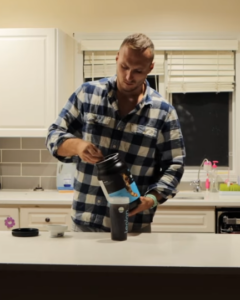
- Wake-Up & Pre-Fueling: Up at 6:00 AM to establish adequate fueling prior to the effort.
- Pre-Run Intake: A protein shake paired with carbohydrates for readily accessible energy, alongside selected vitamins to round out morning nutrition.
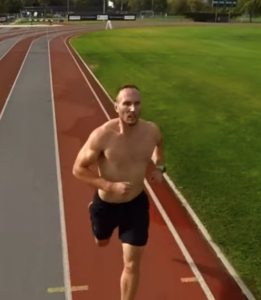
- The Goal & Context: A full-effort test aiming for the mid-5-minute range at the Apple Bowl track in Kelowna, BC, Canada, running at a body weight of 231 pounds.
From National-Level Lifting to Track Endurance
Prior to starting this endurance block, the athletic background was entirely centered on maximum force production:
- High-Level Strength Competition: Background competing across weightlifting, powerlifting, strongman, and Highland games. Disciplines where the sole demand is lifting and moving heavy implements.
- The Pivot Away from the Platform: After earning a qualifying total for Canadian Weightlifting Nationals, the event was canceled during COVID-19. Years of singular preparation were derailed, prompting a complete shift in athletic focus toward endurance.
- The Baseline Mile Test: Starting with zero running-specific preparation, the initial baseline was just over an 8:00 mile. The physical limit was clear: completing 2 to 3 miles maximum, requiring walking breaks, with near-total exhaustion and virtually no baseline aerobic durability.
- Long-Term Endurance Objectives: Setting future benchmarks, including completing an ultramarathon, a solid marathon, a competitive half-marathon, and faster short-distance track marks.
Phase 1: Building the Aerobic Base (December to May)
Before introducing high-intensity speed work, tissue adaptation and general aerobic development had to be established.
- Timeline: December through approximately May.
- Focus: Volume accumulation and distance. Exclusively building mileage to prepare musculoskeletal structures and joints for the repetitive pounding of running.
- Milestone: Gradually progressed until tolerating an average of 40 miles per week consistently and without breakdown.
Phase 2: Speed Endurance & Interval Progression
Once the structural volume base was established, the focus shifted toward increasing mile-specific velocity using interval repeats:
- 400-Meter Repeats:
- Started out running repeats at roughly 1:30 per 400m.
- Progressive training drove repeat times down to 64 seconds, establishing top-end track speed at 230+ pounds.
- 800-Meter Repeats (Initiated ~8 Weeks Out):
- Introduced to build distance-specific speed endurance and bridge the gap between pure turnover and sustained pace.
- 1,200-Meter Repeats (Introduced the Final 4 Weeks):
- High-intensity repeats sustained across 3 to 4 minutes per effort, demanding maximal psychological and physiological output under heavy fatigue.
This combination of high baseline volume and progressive interval density drove the time from an exhausted 8:00+ mile down to a sub-6:00 mile.
Future Targets: Breaking 5:00 and Strength-Running Standards
The sub-6 milestone serves as a foundation for higher benchmarks over the next year:
- Sub-5:00 Mile: Targeting a sub-5-minute mile within the next 12 months.
- Upcoming Mileage Phase: A 3-month high-mileage volume block leading into 2022, accumulating low-intensity running with stroller and chariot runs.
- Subsequent Speed Phase: Returning to focused speed endurance intervals following the volume accumulation block.
- The Hybrid Standard: Targeting elite hybrid milestones, specifically the 500-pound squat paired with a sub-5:00 mile, or a sub-5:00 mile with a 500-pound deadlift performed within a 5-minute window.
Build Strength and Endurance with Citizen Athletics
Balancing heavy strength work with running performance requires structured progressive overload and recovery management. Explore our evidence-based programs designed for athletes who refuse to sacrifice strength for endurance:
- Built for Athletics: Our premium training system engineered to optimize raw strength, power, and high-level movement efficiency.
- Sustainable Strength: The ultimate flagship framework designed for busy individuals looking to lift heavy, build muscle, and remain highly athletic for life.
Watch the Breakdown on YouTube

To see the track footage, pacing execution, and direct commentary from the run at the Apple Bowl track, watch the full video here.