

The standard stationary forearm plank is a classic exercise for building and strengthening the core. However, once you have been training for a while, holding a basic plank becomes too easy. Rather than simply extending the duration of the hold to build endurance, transitioning to more challenging variations will help you build greater core strength and develop new movement skills.
In this guide, Dr. Sam Spinelli, physical therapist and strength & conditioning coach with Citizen Athletics, breaks down foundational plank setup, common technical flaws, and 50 progressive plank variations to challenge your training.
Want to take your training up a notch?
Use promo code SAVE10 to get 10% off any program right now. https://citizenathletics.com
Learn more about our training at the bottom.
Proper Plank Technique and Setup
Before progressing to complex variations, you must master the fundamental setup:
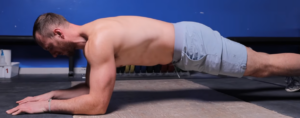
- Start on the ground with your elbows flat and your hands positioned under your head.
- Raise your hips so that only your toes and forearms remain on the floor.
3 Common Plank Mistakes to Avoid
Executing a plank properly requires full-body tension. Avoid these three common errors:
- 1. Reaching the Head Toward the Ground: Keep your head pulled back rather than letting it droop toward the floor. Think about making a double chin to maintain proper neck alignment.
- 2. Sinking into the Shoulder Blades: Do not hang passively on your shoulder joints. The plank requires active recruitment of the serratus anterior and upper body muscles to keep the rib cage supported against the scapulae. Keep your chest pushed away from the floor.
- 3. Excessive Back Arching and Anterior Pelvic Tilt: Do not rely on passive spinal structures by letting your lower back sag. To maximize abdominal engagement, maintain a small arch or a slightly rounded back. Squeeze your glutes and abs while thinking about bringing your belt buckle toward your chin to posteriorly tilt the pelvis.
Key Rule: If you catch yourself making any of these errors during a variation, regress to an easier option (such as dropping to your knees) rather than forcing your way through poor technique.
50 Core-Building Plank Variations
These variations build upon one another, progressing from foundational holds to dynamic, high-instability movements.
Foundational and Bodyweight Hold Variations
- Standard Plank: The classic forearm plank. Master this baseline before moving on.
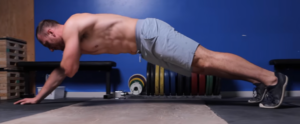
- Tall Plank (Push-Up Position Plank): Held at the top of a push-up position with arms completely straight.
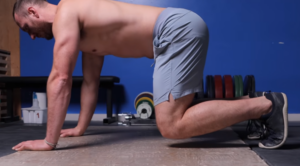
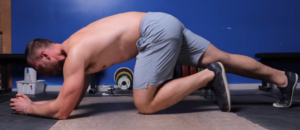
- Bear Plank (Quadruped Plank): Held in a quadruped position with knees bent under the hips and hovered slightly off the ground, placing higher demand on the legs.
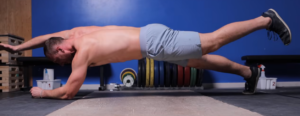
- Hardstyle (RKC) Plank: Performed with forearms extended further forward to create a longer lever arm. Focus on aggressively pulling down through the lats, squeezing the glutes, and bracing the abs.
Dynamic Bodyweight Variations
- Body Saw: From a forearm plank, rock back and forth on your toes (or use foot sliders) to shift your center of gravity.
- Plank Foot Walkout: Walk your feet backward to lengthen the lever, then walk them back into the starting position.
- Dolphin Plank: Involves elevating the hips to work upward shoulder blade rotation, engaging the serratus anterior and overhead shoulder stability.
- Plank with One Leg: Lift one leg off the ground and hold statically for 10 to 30 seconds.
- Plank with Leg Lifts: Perform controlled vertical leg lifts for reps to challenge glute stability.
- Plank with Alternating Leg Lifts: Alternating leg raises side-to-side, forcing the trunk to resist rotation.
- Plank with One Arm: Elevate one arm off the floor, forcing the shoulders and core to resist rotational force.
- Plank with Alternating Arm Lifts: Lift arms alternately to build upper back stability and anti-rotation strength.
- Plank with One Arm and One Leg Lift: Combine single-arm and single-leg lifts simultaneously for a high-level static stability challenge.
- Plank Side-to-Side Locomotion: Shift dynamically side-to-side maintaining a controlled tempo across arms, legs, and trunk.
Lateral and Hip-Dominant Variations
- Side-to-Side Hip Drop: From a forearm plank, gently drop your hips side-to-side in a controlled arc.
- Plank with Hip Abductions: Step one leg out to the side for reps, then repeat on the opposite side.
- Alternating Plank Hip Abductions: Alternate stepping each foot laterally, engaging the entire hip complex.
- Plank Foot Side Walkouts: Walk feet laterally from a narrow stance out to a wide stance and back.
- Wide Stance Plank: Maintain a wide foot position statically, experimenting with width to adjust leverage.
- Plank Quick In-Outs: Rapidly hop or move both feet simultaneously between narrow and wide stances.
- Plank Knee Tuck: From a semi-dolphin position with elevated hips, slowly drive one knee toward the chest while keeping it hovering just above the floor.
Traveling and Elevation Progression Variations
- Plank Crawl Out: Walk your hands forward into an extended position and back, placing extreme load on the abdominals.
- Plank Crawl: Move forward using full locomotion across both arms and legs.
- Plank to Tall Plank: Transition fluidly between a forearm plank and a push-up position plank while controlling hip rotation.
- Tall Plank Shoulder Taps: Tap the opposite shoulder from a tall plank while keeping the hips and shoulders square.
- Tall Plank Single-Arm Hold: Maintain a extended single-arm hold in the push-up position.
- Extended Plank: Walk your hands out as far forward as possible to increase trunk leverage.
- One-Arm Extended Plank: An advanced extension variation lifting one arm in an extended lever position.
Swiss Ball Stability Variations
- Swiss Ball Plank: Place forearms on a stability ball while holding a standard plank position.
- Swiss Ball Plank Saw: Drive forearms back and forth on the ball to resist trunk extension.
- Swiss Ball Kneeling Stir the Pot: Perform circular motions on the ball from a kneeling position to master control.
- Swiss Ball Stir the Pot: Rotate forearms in wide circles on the ball from a full plank stance.
- Swiss Ball Feet-Elevated Stir the Pot: Elevate feet on a surface while performing forearm circles on the ball.
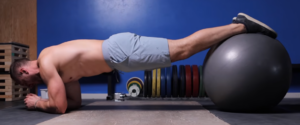
- Swiss Ball Feet-On-Ball Plank: Place toes on top of the ball with forearms on the floor.
- Swiss Ball Feet-On-Ball Body Saw: Press backward through the legs with feet on the ball to extend the lever.
TRX / Suspension Trainer Variations
- TRX Foot Plank: Place feet in suspension straps for increased multi-planar instability.
- TRX Body Saw: Press backward in the straps, using your legs to move your body through an extended lever arm.
- TRX Mountain Climber: Drive knees alternately toward the chest while keeping the spine neutral.
- TRX Push-Up Plank: Hold a tall plank with hands in the TRX straps (lower straps increase difficulty).
- TRX Single-Arm Push-Up Plank: Perform a single-arm hold in suspension straps.
- TRX Fallouts: Perform a standing rollout motion using TRX handles, testing core and upper body strength.
Resistance Band and Weight Plate Variations
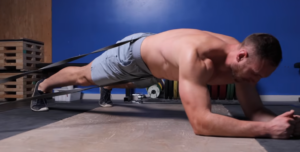
- Plank Band Pull-Down: Anchor a band in front and perform single-arm pulls from a plank position to resist rotation.
- Plank Band Press: Anchor a band behind and press outward against the resistance.
- Band-on-Upper-Back Plank: Place a resistance band across your upper back anchored under your hands to overload the upper back and serratus anterior.
- Plank Plate Push-Pull: Push a weight plate or sliding object away with one hand and pull it back.
- Plate Plank Drag: Drag a weight plate underneath your torso from side-to-side, alternating hands.
- Lateral Band Plank: Resist lateral flexion against band tension, combining front and side plank demands.
High-Level Advanced Variations
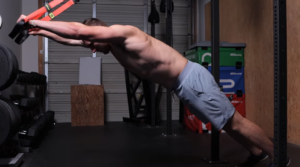
- Superman Plank (Wall-Elevated): Start with hands high on a wall in an elevated push-up stance and walk hands down toward the floor while maintaining complete pelvic and spinal control.
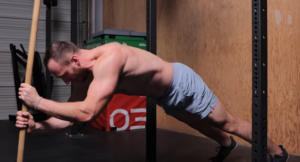
- Dowel Climb Plank: Starting standing with a dowel, walk your hands down the dowel toward the floor and climb back up without arching your back or twisting your hips.
- Rope Climb Plank: An extreme instability variation building on the dowel climb by using a suspended rope. Requires exceptional core preparation prior to attempting.
Technical Takeaways
Progressing your core training does not require holding static planks for minutes on end. By systematically introducing unstable surfaces, longer lever arms, single-limb support, and multi-directional forces, you can continuously build trunk strength and motor control.
Take Your Training Further
Ready to follow structured, science-backed routines built by physical therapists and strength coaches? Explore our evidence-based workout programs at Citizen Athletics.
- Built for Athletics: Our premium training system engineered to optimize raw strength, power, and high-level movement efficiency.
- Sustainable Strength: The ultimate flagship framework designed for busy individuals looking to lift heavy, build muscle, and remain highly athletic for life.
Watch the Full Technical Breakdown
To see proper form, speed, and real-time execution for all 50 variations, watch Dr. Sam Spinelli walk through each exercise in the full video guide here.