


Building well-developed latissimus dorsi muscles is the primary factor in achieving a wide, tapered V-taper physique. However, many lifters fail to maximize back width due to poor exercise selection, inefficient technique, and an incomplete understanding of how the lats function.
To optimize lat hypertrophy, you must understand lat anatomy, regional biomechanics, optimal force angles, and how to apply this data to exercise selection and execution.
Want to take your training up a notch?
Use promo code SAVE10 to get 10% off any program right now. https://citizenathletics.com
Learn more about our training at the bottom.
Lat Anatomy and Primary Biomechanical Functions
The latissimus dorsi is one of the largest muscles in the human body.
- Origins: Pelvis, sacrum, lumbar vertebrae, and lower ribs (spanning across the low and mid-back).
- Insertion: Intertubercular groove of the upper arm bone (humerus).
Because of these anatomical attachments, the lats perform three primary joint actions:
- Shoulder Adduction: Pulling the arm down to the side from an overhead position.
- Shoulder Extension: Pulling the arm down and back from in front of the body.
- Shoulder Internal Rotation: Rotating the arm inward toward the body.
Secondary and Assisting Actions
The lats also contribute to horizontal abduction (drawing the arm out to the side from the midline), though other upper back muscles dominate this motion. To train the lats effectively, choose exercises where you can pull with your elbows kept tight to the body at the finish position.
Additionally, the lats contribute to spinal movement:
- Bilateral Contraction: Assists in lower back extension.
- Unilateral Contraction: Contributes to lateral flexion and rotation of the spine.
Regional Breakdown and Optimal Leverage Angles
The latissimus dorsi is subdivided into three distinct regions, each favoring specific movement planes:
- Thoracic (Upper Region): Primarily assists in shoulder extension.
- Lumbar (Middle Region): Primarily assists in shoulder adduction.
- Pelvic (Lower Region): Primarily assists in shoulder adduction.
Force Generation and Leverage by Joint Angle
The lats do not maintain equal leverage throughout a complete range of motion:
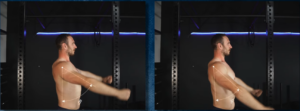
- Shoulder Extension: The lats generate maximal force between 45° and 60° of shoulder flexion. At higher degrees of extension overhead, overall leverage drops significantly, leaving only the inferior (lower) region with leverage to assist.
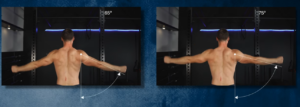
- Shoulder Adduction: Optimal force generation occurs around 65° to 75° of shoulder abduction. Leverage in the upper region drops off first as elevation increases, followed by the middle and lower regions.
Vertical Pulling Exercises
When structuring compound movements for back width, training splits into vertical pulls and horizontal pulls.
1. The Pull-Up
While pull-ups are an effective overall movement, they present distinct limitations when strictly isolating the lats for growth:
- In the fully overhead position, the lats cannot contribute effectively; recruitment shifts to the posterior deltoids, traps, and pectorals.
- Performance is frequently limited by fatigue in secondary muscle groups such as the forearms, biceps, and trunk.

2. The Lat Pulldown
The lat pulldown resolves several limitations of the pull-up:
- Thigh Anchoring: Eliminates trunk stability demands, allowing direct overload on the back.
- Controlled Momentum: Using slight momentum out of the top position helps bypass the overhead dead zone and enters the range where the lats are heavily loaded.
- Execution Cue: Focus on pulling your elbows down and tight to the torso to achieve full shoulder adduction and extension.

Modifications for Vertical Pulling
- Single-Arm Lat Pulldown: Unilateral execution allows you to adjust hand orientation to your individual anatomy, achieve deeper adduction/extension in the bottom position, and incorporate lateral spinal flexion for peak contraction.
- Half-Kneeling Band Pulldown: A practical alternative when training with limited gym equipment or lacking cable stations.

Horizontal Pulling Exercises (Rows)
1. The Bent-Over Row vs. The Seal Row
The traditional bent-over row is a standard strength movement, but it is frequently limited by lower back fatigue rather than lat capacity.

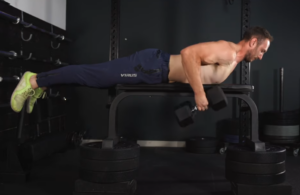
- The Seal Row: By supporting the chest on a bench, the lower back is eliminated as a bottleneck.
- Dumbbells vs. Barbell: Using dumbbells allows for greater freedom of movement, tighter elbow tuck, and a stronger squeeze in peak adduction and extension. You can alternate training blocks between barbells (strength focus) and dumbbells (range of motion focus).
- Bench Setup Tip: Elevate the foot end of the bench slightly to create a slight downward angle, enhancing peak tension through the lat’s active range of motion.
Combining a lat pulldown variation and a seal row variation provides the most complete stimulus by addressing multiple angles and ranges.
Additional Compound Variations
- Three-Point Dumbbell Row: Allows you to use slight momentum out of the stretched position to overload the peak force range while incorporating natural spinal movement.

- Chest-Supported Machine Row: An extremely stable horizontal pull that emphasizes the bottom range of motion, making it an ideal pairing in programs containing high vertical pulling volume.
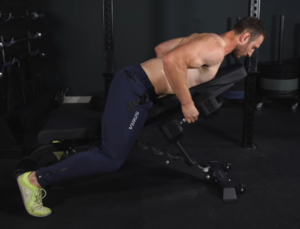
- High-to-Low Row: A hybrid vertical/horizontal pull that matches the line of pull of lat fibers.
- Start with the shoulder flexed to roughly 120° at the top.
- Pull back without leaning excessively backward; focus purely on lat contraction.
- A slight forward lean or using an incline bench for chest support stabilizes the torso and maximizes tension on the target fibers.
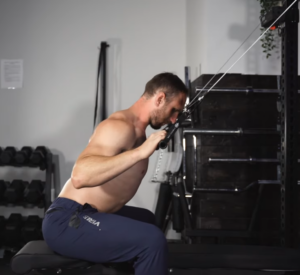
Lat Isolation and Assistance Exercises
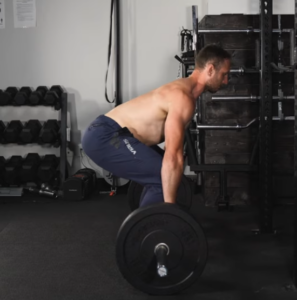
1. The Deadlift
While primarily a hip hinge, heavy deadlifts force the lats to contract isometrically to maintain spinal extension and actively perform shoulder extension to keep the barbell close to the body.
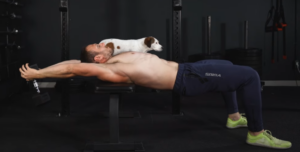
2. The Pullover
- Dumbbell Pullover Limitation: The lats lose mechanical leverage above 120° of shoulder flexion, meaning the deep stretch in a dumbbell pullover is handled primarily by the pecs and posterior deltoids.
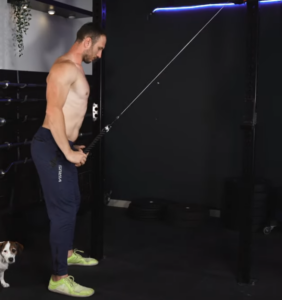
- Standing Cable or Band Pullover: A superior isolation alternative. Begin hinged forward with shoulders at ~120° of flexion, then bring your torso more upright as you pull the cable down to match the resistance curve to the lat’s peak end-range leverage.
Note: Prioritize compound vertical and horizontal pulls as your main drivers, utilizing isolation movements as supplementary work.
Exercise Execution: Grip Width, Orientation, and Cueing
Grip Width
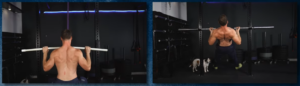
- The Research: Andersen et al. compared three grip widths (1x, 1.5x, and 2x biacromial/shoulder distance) during overhand lat pulldowns and found no significant difference in lat muscle activation between widths.
- Practical Application: Very wide grips reduce overall range of motion. A moderate grip width, where your elbows align naturally with your ribcage at the bottom, is generally optimal.
Grip Orientation: Overhand vs. Underhand
- The Research: Lusk et al. compared wide and narrow grips using pronated (overhand) and supinated (underhand) grips. The pronated grip yielded significantly higher lat activation during pulldowns than the supinated grip.
- Row Variations: Research by Youdas et al. on inverted rows demonstrated that a supinated grip produced superior lat activation compared to pronated.
- Summary: Use a pronated/overhand grip for pulldowns and experiment with an underhand or neutral grip on rows to optimize elbow path and adduction.
Mind-Muscle Cueing for Beginners
- The Research: Snyder et al. (2009) demonstrated that providing beginners with specific verbal cues on how to engage the lats during pulldowns significantly increased lat activation and decreased bicep involvement.
- Key Takeaway: Correct setup and mechanics are essential, but consciously focusing on pulling through the lats and driving the elbows down improves target muscle recruitment.
Build Your Back with Science-Based Programming
Maximizing lat width requires selecting movements that match lat fiber orientation, managing joint angles for optimal force leverage, and executing each rep with strict mechanics.
If you are ready to take the guesswork out of your hypertrophy and strength training, explore our evidence-based training programs at Citizen Athletics.
- Built for Athletics: Our premium training system engineered to optimize raw strength, power, and high-level movement efficiency.
- Sustainable Strength: The ultimate flagship framework designed for busy individuals looking to lift heavy, build muscle, and remain highly athletic for life.
Watch the Full Scientific Breakdown
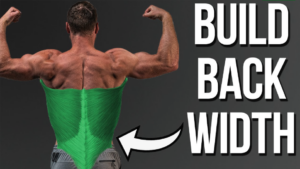
For a visual demonstration of the anatomy, leverage angles, and exercise setups covered in this guide, watch the complete video breakdown here.