

Well-developed quadriceps not only create an impressive lower-body aesthetic, but they are also essential for sports performance and injury risk reduction. However, many lifters struggle to fully develop all areas of their quads.
To maximize quadriceps development, you need an evidence-based approach: understanding quad anatomy, regional differences, unique biomechanical functions, and how to apply this research directly to exercise selection.
Want to take your training up a notch?
Use promo code SAVE10 to get 10% off any program right now. https://citizenathletics.com
Learn more about our training at the bottom.
Quadriceps Anatomy and Biomechanics
The quadriceps muscle group consists of four distinct muscles:
- Vastus Medialis
- Vastus Intermedius
- Vastus Lateralis
- Rectus Femoris
All four muscles run down the thigh and converge into a central quadriceps tendon, which inserts into the patella and connects to the lower leg via the patellar tendon.
Origin Points and Muscle Actions
- The three vastus muscles originate on different parts of the femur.
- The rectus femoris originates on the front of the pelvis.
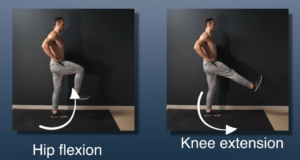
Because of these anatomical attachments, all four quad muscles extend the knee, but the rectus femoris also flexes the hip.
Innervation and Regional Hypertrophy
All quadriceps muscles are innervated by the femoral nerve. While it is commonly assumed that a single nerve prevents preferencing specific muscles or regions, research indicates that exercise selection and execution directly impact how different muscles and regions are stimulated:
- Proximal vs. Distal Branching: The femoral nerve divides into proximal and distal branches, meaning upper and lower portions of the quadriceps can experience different degrees of stimulation.
- Rectus Femoris Activation: The rectus femoris demonstrates varying activation proximally and distally depending on whether an exercise challenges hip flexion or knee extension.
- The Two-Joint Limitation in Compound Lifts: Because the rectus femoris crosses two joints (the hip and the knee), its ability to generate mechanical tension is reduced during exercises where the hip flexes while the knee extends (such as traditional squats). Research shows that the rectus femoris experiences minimal growth from squats.
Optimizing the Rectus Femoris
To effectively stimulate and grow the rectus femoris, two specific biomechanical conditions are required:
- Static Hip Knee Extension: Exercises where the hip remains static while the knee extends (such as the leg extension) allow the rectus femoris and vastus muscles to grow effectively.
- Hip Flexion at Full Extension: Compared to other hip flexors, the rectus femoris contributes most effectively when the hip is near or at full extension. Movements loading the muscle in this extended hip position include:
- Active straight leg raises (using ankle weights).
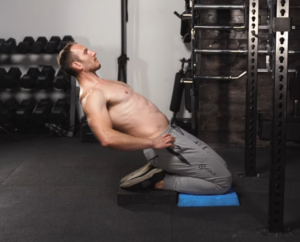
- Reverse Nordics (maintaining hip extension while isometrically resisting hip flexion).
The Role of Range of Motion in Quad Hypertrophy
Training through deep knee flexion is critical for optimizing quad growth:
- Norcoid et al. (2014): Comparing short vs. long muscle length training showed that long muscle lengths result in greater quad hypertrophy.
- Kubo et al. (2019): Comparing full squats vs. half squats over 10 weeks revealed slightly more quad growth with deeper squat variations.
- Pedrosa et al. (2020): Evaluated full range of motion leg extensions against partial ranges (top-half vs. bottom-half). The bottom-half (lengthened) range produced similar, and at certain sites, superior, hypertrophy compared to full range, while the top-half range produced less growth overall.
Takeaway: Emphasize a deep degree of knee flexion across quad movements to capitalize on stretch-mediated hypertrophy.
Best Compound Movements for Quad Development
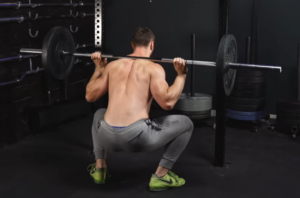
1. Deep Squats
Squats are thoroughly researched and highly effective for building the quads, but execution dictates the muscle recruitment. To maximize quad loading over hip and back loading:
- Encourage an angled shin: Allowing the knees to travel forward over the toes places higher mechanical demands on the quads.
- Maintain a relatively upright torso: Excessive forward torso hinging shifts the load toward the glutes and lower back.
- Keep a relatively forward toe position: Excessive external rotation (beyond 30 degrees) reduces relative quad loading.
- Use heel elevation: Elevating the heels allows for a more upright torso, forward knee travel, and greater knee flexion without mobility restrictions.
Note on Squat Variations: Research comparing front squats, high-bar squats, and low-bar squats shows minimal difference in quad hypertrophy potential, provided the key execution cues above are maintained. Choose the variation that suits your structure and rotate them periodically.
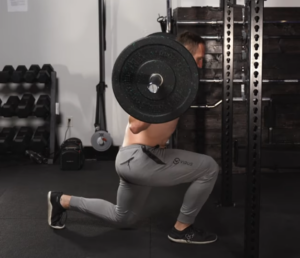
2. Split Squats
Bilateral squats are not mandatory for building quads. Split squats (semi-unilateral movements) offer several distinct advantages:
- Easier execution cues: Achieving forward knee travel, an upright torso, and a forward foot angle is often simpler in a split stance.
- Reduced back fatigue: Training one leg at a time makes lower back strength less of a limiting factor.
- Stance adjustability: Asymmetrical feet allow for customized hip and knee positioning. Can be loaded using a barbell (back or front rack) or dumbbells.
3. Front Foot Elevated Split Squats
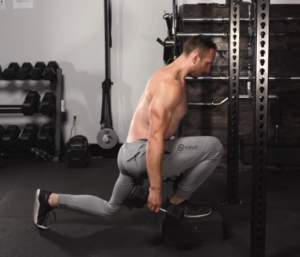
- The issue with Rear Foot Elevated (Bulgarian) Split Squats: Elevating the rear foot can limit deep knee flexion on the working leg and often shifts emphasis to the glutes.
- The front foot elevation solution: Elevating the front foot allows you to push body weight forward and drive the knee into deeper flexion, significantly loading the quad in a lengthened range.
Machine Alternatives & The DIY Wall Hack Squat
Standard machines such as hack squats, pendulum squats, and leg presses are exceptional options for quad hypertrophy if you maintain deep knee flexion and forward knee travel.
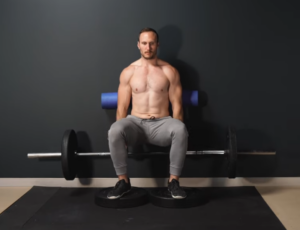
If you do not have access to these machines, use the DIY Wall Hack Squat:
- Place a foam roller between your back and a smooth wall.
- Elevate your feet on bumper plates.
- Hold resistance using a barbell behind the legs, dumbbells, or resistance bands.
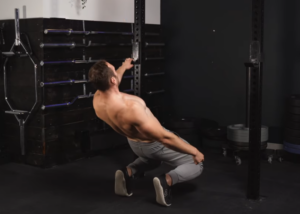
Isolation Movements: Leg Extensions, Reverse Nordics, and Sissy Squats
Compound movements leave the rectus femoris understimulated. Incorporating isolation movements solves this issue:
- Leg Extensions: Keep the hip static to load both the vastus muscles and the rectus femoris through knee extension.
- Reverse Nordics & Sissy Squats: These movements challenge the quads by combining knee extension with an isometric hip flexion demand at full hip extension. This provides the stimulus that standard compound movements miss.
Key Quad Training Principles Summary
- Execute deep knee flexion: Maximize range of motion to leverage stretch-mediated hypertrophy.
- Prioritize mechanics: Ensure forward knee travel, an angled shin, and an upright torso on compound lifts (elevate heels when necessary).
- Include compound variations: Utilize squats, split squats, and front foot elevated split squats.
- Address the rectus femoris: Add static-hip knee extensions, reverse Nordics, or sissy squats to ensure all four quad heads are fully developed.
(Anatomy Note: While the quadriceps are named for their four heads, recent anatomical research has identified a potential fifth quadriceps muscle in some individuals, which remains under scientific discussion.)
Train With Citizen Athletics
Ready to take the guesswork out of your training with programs built on biomechanics and sports science? Explore our evidence-based training programs at Citizen Athletics.
- Built for Athletics: Our premium training system engineered to optimize raw strength, power, and high-level movement efficiency.
- Sustainable Strength: The ultimate flagship framework designed for busy individuals looking to lift heavy, build muscle, and remain highly athletic for life.
Watch the Full Scientific Breakdown
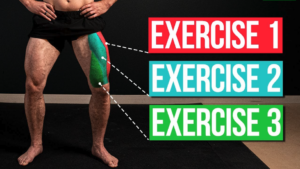
For a complete visual walkthrough of the anatomy, biomechanical breakdown, and exercise setups demonstrated in this guide, watch the full video breakdown here.