


Are ice baths, cold showers, and ice swimming actually beneficial for your recovery, or are they detrimental to your long-term fitness goals?
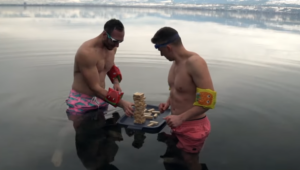
At Citizen Athletics, we favor evidence-based training over popular trends. To separate fact from fiction, Dr. Sam Spinelli (Physical Therapist and Strength Coach) and Broden Harris dove into a frigid Lake Okanagan, where the water temperature was a crisp 3 degrees Celsius, to experience cold water immersion firsthand and break down what the scientific literature actually says.
Want to take your training up a notch?
Use promo code SAVE10 to get 10% off any program right now. https://citizenathletics.com
Learn more about our training at the bottom.
The Common Claims and Theories Behind Cold Water Immersion
Proponents of cold water immersion make broad claims about its performance benefits. The most common assertions include:
- Improved short-term recovery
- Reduced muscle soreness
- Increased immune function
To explain these claimed benefits, sports scientists and coaches point to a few primary physiological theories. The baseline idea is that decreasing tissue temperature and reducing blood flow alters how your body responds to intense physical stress.
The Biological Mechanisms
The primary theories suggest that cold exposure facilitates recovery through several key pathways:
- Altering the central nervous system via temperature drops.
- Decreasing the physiological demand placed on the cardiovascular system.
- Eliminating metabolic byproducts accumulated during training.
- Reducing muscle damage directly at the tissue level.
Protocols for Safe Cold Water Exposure
If you choose to use cold water immersion, safety and proper sequencing are critical to avoid severe core temperature drops or hypothermia.
1. The Pre-Inflow Warm Up
Before entering cold water, you should warm up for one to two minutes. Getting your body moving initially prepares your system for the impending temperature shock.
2. Time Limitations in the Water
Exposure time must be strictly regulated. Staying sub-20 minutes in frigid water is essential to mitigate extreme safety risks. For perspective, during our lake trial, remaining submerged for even two consecutive minutes proved highly challenging and physically painful.
3. The Post-Exit Routine
What you do immediately after exiting the water changes how your core temperature stabilizes.
- Do not put your clothes on immediately. If you put dry clothes over wet skin, they will absorb the moisture, stay damp, and keep you cold.
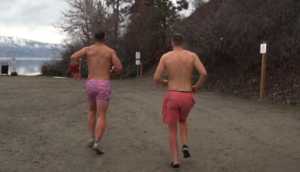
- Towel off, put your shoes on, and go jogging. Engaging in a light jog forces your body to naturally raise its core temperature and dries your skin.
- Put your clothes on only after jogging and warming up your internal core.
What the Research Says: Short-Term vs. Long-Term Outcomes
The scientific data surrounding cold water immersion presents a mixed bag. Whether it is favorable or unfavorable depends entirely on the degree of cold water used, the length of exposure, and the time horizon being evaluated.
The Short-Term Effects: Performance Preservation
Data from short-term studies (such as Kotsuki 2020, Tavares 2020, and others) demonstrate that cold water immersion improves acute recovery.
In these studies, researchers take two groups of people and subject them to a challenging physical activity, such as a cycling endurance test, drop jumps, or a heavy workout. One group does nothing, while the other undergoes cold water immersion.
The Short-Term Verdict: The group receiving the cold water treatment generally shows a superior level of performance within that same day, the next day, or within 48 hours. While the performance margin is not necessarily massive, a clear trend shows that the cold water group performs better in the short term.
The Long-Term Effects: Blunted Adaptations
What works in the short term does not necessarily transfer to long-term progress. Long-term training studies (such as Yamamoto 2015, Frolic 2014, and Holston 2008) show that regular cold water immersion yields no beneficial outcomes in the long term, and in some cases, is actually detrimental.
Our long-term training adaptations, like muscle growth and strength, rely on pathways that are temperature-dependent. To build a stronger body, you actually want certain natural cellular responses to occur post-workout:
- Inflammation
- Triggering of key signaling pathways
- Accumulation of molecular byproducts
Because cold water immersion decreases your core temperature, it blunts these vital actions. Consequently, the signals that create hypertrophic changes (muscle growth), strength adaptations, and general system changes are less significant and actively reduced.
Note: This negative long-term effect appears to be less impactful on endurance. For individuals who are strictly endurance-focused, these blunted muscle-building adaptations do not apply to the same degree.
Practical Application: How to Use This Data
How should you apply this science to your actual training split? It comes down to identifying your immediate goal.
Use Cold Water If:
You have an upcoming event where you must maximize your recovery in the short term. For example, if you are a CrossFit athlete competing in a multi-event weekend or a tournament with multiple workouts in a single day, icing between events is highly beneficial. Your priority is your immediate performance during that short timeframe, not the long-term adaptations you will gain three months down the road.
Skip Cold Water If:
Your primary goal is long-term progression, muscle growth, and building strength. If you are okay with a temporary, slight decrease in performance in the days following a tough workout, skipping the ice bath is your best bet. Using it consistently during a standard training block will likely yield no significant value and may cause a negative effect on your overall physical gains.
The Mental Factor
Some individuals utilize cold water immersion because they believe it gives them a mental advantage and builds greater mental strength. While enduring freezing temperatures is undeniably difficult, there is no direct evidence showing that this specific mental challenge transfers effectively over to other diverse training tasks.
Safety Factor:
Be sure to discuss with your doctor and be cleared before beginning cold water immersion. If you have any health concerns or risk factors, these should be cleared before beginning.
Ready to Optimize Your Training?
Ready to skip the generic fitness fads and build a stronger, more resilient body using training protocols that actually align with long-term physiology?
- Built for Athletics: Our premium training system engineered to optimize raw strength, power, and high-level movement efficiency.
- Sustainable Strength: The ultimate flagship framework designed for busy individuals looking to lift heavy, build muscle, and remain highly athletic for life.
Watch the Scientific Breakdown
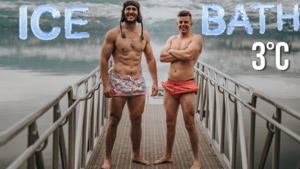
Prefer to watch the full breakdown and see the protocol in action? Check out our complete YouTube video here.