

When lifters want to build bigger, stronger quads, they immediately default to traditional back squats or front squats. While compound squats are staple exercises, they come with a few notable training disadvantages:
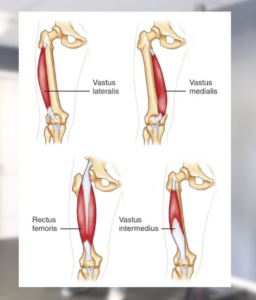
- They don’t effectively target the rectus femoris: The quadriceps are made up of four primary muscles: the vastus medialis, vastus intermedius, vastus lateralis, and the rectus femoris. The three vastus muscles originate on the femur and insert into the kneecap, meaning their sole function is to extend the knee. The rectus femoris, however, originates on the front of the pelvis, crossing both the hip and knee joints. Because it crosses both joints, it does not activate or hypertrophy well during compound squatting where the hip and knee flex simultaneously. Studies show it is far more effectively stimulated when the hip remains stationary while the knee extends (like a leg extension), or when knee extension is combined with hip flexion.
- They require substantial external load: To sufficiently challenge your legs with standard squats, you need a heavy barbell or a vast array of plates ranging anywhere from 135 to 500 pounds depending on your strength level. This presents an issue if you are training at home with minimal equipment or trying to limit touching public equipment at a commercial gym.
- They are systemically exhausting: Traditional squats heavily tax your glutes, adductors, and back extensors alongside your quads. If you have already completed a heavy deadlift or lunge session, your lower back might be too fatigued to support a heavy squat session.
The sissy squat solves all three problems. It keeps the hips extended to isolate the rectus femoris, requires absolutely no external equipment to be intensely challenging, and completely removes your lower back from the equation, allowing you to hammer your legs even when your back is exhausted.
Want to take your training up a notch?
Use promo code SAVE10 to get 10% off any program right now. https://citizenathletics.com
Learn more about our training at the bottom.
Is the Sissy Squat Dangerous for Your Knees?
A common myth is that sissy squats are inherently bad for your knees. Because the sissy squat is a pure knee-extension movement, it does place a high demand on the front side of the knee joint. However, an increased demand is not inherently dangerous.
Decades of research on leg extensions prove that direct knee-extension loading is safe, effective for muscle building, and carries no higher risk of injury than other exercises. Just like any movement, you can risk irritating tissues if you are not physically prepared, if you rush into loading them too quickly, or if you do too much volume too fast. When programmed intelligently, variations like the reverse nordic (included below) are highly praised in the injury-prevention world for reducing hip and knee injuries.
Step-by-Step Sissy Squat Progression
Sissy squats are an advanced, high-level movement. If you have not been training your quads consistently through deep ranges of motion, you will want to build your capacity using this step-by-step roadmap. Spend a few weeks to a few months mastering each stage before moving forward.
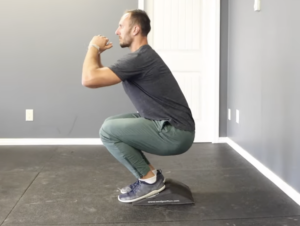
Step 1: Heels-Elevated Squat
Perform a standard bodyweight squat with your heels propped up on a solid surface. This angle keeps your torso upright and encourages your knees to drift forward. To advance this variation, move your feet closer together to drive the knees even further forward. You can also add light resistance using a backpack or a dumbbell.
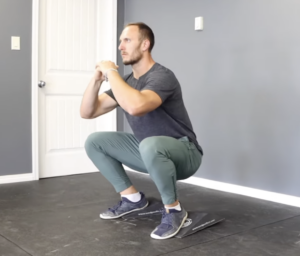
Step 2: Narrow Heels-Elevated Squat with Lean-Back
Using the same close-stance, heels-elevated setup, begin to actively extend your hips and lean your upper body back slightly as you rise from the bottom of the squat. This serves as a gradual bridge toward the tension requirements of the full movement.
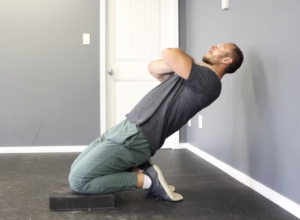
Step 3: The Reverse Nordic
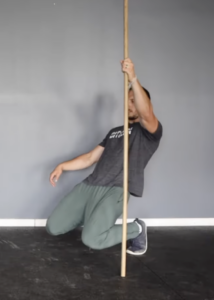
Kneel on a padded mat with your knees on the pad and your toes tucked on the ground behind you, this position optimizes your pulling angle and feels best on the joints. Start by performing a basic kneeling squat (hinging at the hips) to get used to deep knee flexion. Over time, progress the movement by keeping your hips fully extended and your trunk rigid as you lean your entire torso backward, loading the quads under a deep stretch.
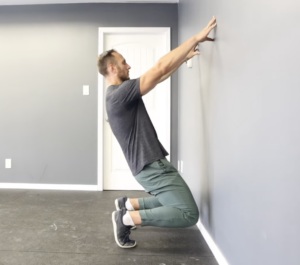
Step 4: Sissy Squat Against a Wall
Stand facing a wall and place your hands on it for support. Elevate your heels, bend your knees, and let them travel directly forward toward the wall. The wall provides stability, reduces the balance demand, and limits how far back you have to lean. If this feels too intense, allow your hips to bend slightly at first, then work on keeping them extended as your strength improves.
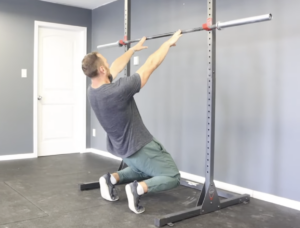
Step 5: Hand-Supported Sissy Squat (The Training Gold Standard)
Turn away from the wall and hold onto a sturdy, fixed structure at your side for balance. If you are in a gym, use a squat rack or a Smith machine; if you are at home, use a doorway or a heavy chair. Elevate onto your toes, drive your knees forward toward the floor, and allow your shoulders to drift backward while keeping a straight line through your hips.
Citizen Athletics Note: We recommend that most lifters stick with this hand-supported version as their primary training option. Using your hands to eliminate the balance requirement allows you to focus purely on progressively loading the quads with maximum effort over time.
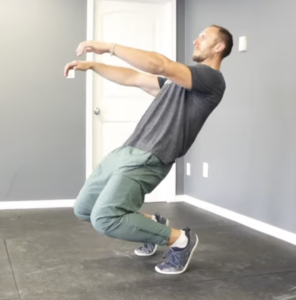
Step 6: Freestanding Sissy Squat
This is the final, unassisted variation. While it looks impressive, the freestanding sissy squat requires an extreme amount of balance and motor control. For most lifters, managing the balance demand becomes so difficult that it limits how heavily they can actually load the muscles, making it less effective for pure strength and hypertrophy than the hand-supported version.
Move, Lift, and Perform Like an Athlete
Building resilient knees and powerful quads requires smart, evidence-based exercise progressions. Stop guessing your workouts and follow a template designed by professionals to maximize your physical potential:
- Built for Athletics: Our premier training system engineered to maximize raw strength, power, and movement efficiency.
- Sustainable Strength: The ultimate training framework for busy individuals looking to lift heavy, build muscle, and remain athletic for life.
Watch the Full Technical Breakdown
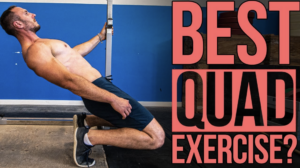
To see the exact alignment of the hips, the setup for the reverse nordic, and the hand-supported mechanics in motion, check out our full video here.