

You have decided you want to lose some weight, and you have started making an effort to eat some healthier foods. But then a co-worker tells you that if you want to really burn off fat, you have to do HIIT (high-intensity interval training). When you get home from work, you pull up a HIIT class, get after it, and sweat buckets. This starts to make you think: should you focus on diet or exercise?
To understand where you should put your focus for success, we need to look at what the current science says about diet versus exercise for weight loss.
Want to take your training up a notch?
Use promo code SAVE10 to get 10% off any program right now. https://citizenathletics.com
Learn more about our training at the bottom.
The Basics of the Weight Loss Equation
To start off, we can look at a simplified breakdown of how weight loss happens by thinking of it as a seesaw.
- On one side: You have calories coming in.
- On the other side: You have calories going out.
When this equation is balanced, you maintain your weight. If you take in fewer calories, you tip the equation in your favor and burn more calories than you consume, resulting in weight loss. Alternatively, if you keep eating the same but burn more calories, you are able to lose weight as well.
This is where the conversation usually comes in about diet versus exercise. Unfortunately, it is not necessarily as simple as the seesaw example because there are a few more layers to consider.

The Flaws of Using Exercise to Offset Calories
People often think of using exercise as a way to offset calories coming in. For instance, if you eat something you really want, you think you just have to burn it off. A single donut has around 200 calories, and you can run for roughly 20 minutes to burn off those calories.
Technically this is right, but there are major flaws with this type of thinking:
- Time Constraints: Adding in more and more exercise takes up a lot of time. Since most people are pretty busy, this often ends up stressing people out.
- Fatigue and Energy Compensation: Exercising a lot can leave people feeling very tired and fatigued. This is a significant issue for weight loss because we do not just burn calories through intentional exercise.
Understanding Where Your Calories Actually Go
Most people only burn about 10% to 30% of their calories through exercise. In contrast, your body burns calories through processing food, using your brain, supporting your organs, and doing general daily tasks.
This last point is known as NEAT (non-exercise activity thermogenesis), which represents how many calories you burn in a day just by moving. When you fidget, move your legs, and sit upright, you burn a lot more calories than people realize.
When you end up crushed from hard exercise and avoid moving all day because you are sore or tired, you end up offsetting the calories you burned or even reducing your overall daily calorie burn further, defeating the purpose of the workout.

Increased Hunger and the Limits of Exercise Alone
Another issue is that for a lot of people, regularly exercising really hard can increase their hunger. If a person is not as focused on their nutrition, this increased appetite may end up causing them to eat more than they should for weight loss.
This can make exercise a poor choice for weight loss when utilized in isolation. This reality is supported by a lot of different research studies. Individuals undergoing just a physical activity program often do not consistently lose weight. While they do often improve their health and many other factors, their body weight does not consistently change.
Why Diet Offers a Higher Return on Investment
In contrast, working on reducing the calories inside of the equation offers a bigger return for your investment.
If instead of going for that 20-minute run, you just do not eat the donut, you create the exact same calorie deficit. Making choices that prioritize lower-calorie options and reducing highly dense foods will make a bigger impact on your balance. Crucially, unlike exercise, limiting your intake does not take up extra time.
Finding Lasting Balance for Long-Term Success
At the end of the day, you are probably going to want to make choices that encourage both better nutritional changes and better exercise changes.
Eating well is highly beneficial for you, even if your goal is not weight loss. Similarly, regularly dosed exercise is arguably one of the best things you can do for your overall health. Both play vital roles in your long-term wellness.
Ready to Optimize Your Training?
At Citizen Athletics, we use evidence-based principles to take the guesswork out of your fitness journey. We balance training strategies to keep your joints healthy, your motivation high, and your body primed for consistent, sustainable progress.
- Built for Athletics: Our premium training system engineered to optimize raw strength, power, and high-level movement efficiency.
- Sustainable Strength: The ultimate flagship framework designed for busy individuals looking to lift heavy, build muscle, and remain highly athletic for life.
Watch the Scientific Breakdown
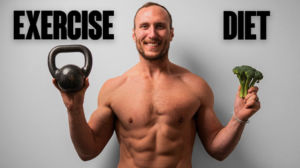
For a complete look at the data, the energy balance equation, and how to practicalize these weight loss principles, watch the full breakdown here.