

A strong posterior chain, comprising the glutes, hamstrings, and lower back, is the engine room for athletic performance. Whether you’re looking to increase your deadlift, improve your sprint speed, or simply build a more resilient back, the Reverse Hyperextension is a legendary tool for the job.
At Citizen Athletics, we focus on movements that build capacity and “armor the body” against injury. Here is why the reverse hyper is so effective and how you can replicate its benefits even if you don’t have access to a specialized machine.
Want to take your training up a notch?
Use promo code SAVE10 to get 10% off any program right now. https://citizenathletics.com
Learn more about our training at the bottom.
Why the Reverse Hyper?
The Reverse Hyper is unique because it allows you to train hip extension while decompressing the spine. Unlike a traditional back extension, where your upper body moves, in a reverse hyper, your torso is stationary while your legs move.
- Glute & Hamstring Isolation: It forces the glutes and hamstrings to drive the movement through a large range of motion.
- Low Back Resiliency: It provides a “traction” effect on the lower back at the bottom of the rep, followed by a strong contraction of the spinal erectors at the top.
Perfecting the Technique
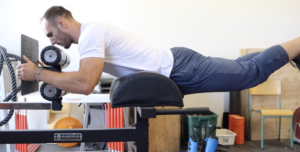
- The Setup: Lay prone on the machine or bench so your hips are right at the edge, allowing your legs to hang freely.
- The Pull: Squeeze your glutes and hamstrings to lift your legs until they are in line with your torso.
- The Finish: Avoid over-arching your lower back at the top. Think about reaching your heels toward the back wall rather than just “lifting high.”
Top Alternatives for Home or Commercial Gyms
Not every gym has a Reverse Hyper machine. Here are the best ways to get the same stimulus using standard equipment:
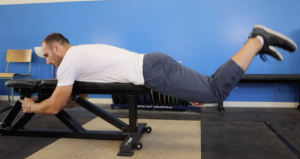
1. Bench Reverse Hypers
Lay prone across a standard weight bench. Hug the bench tight with your arms for stability and perform the same leg-lift motion. While you won’t have the same pendulum resistance, you can increase the challenge by holding a small dumbbell between your feet.
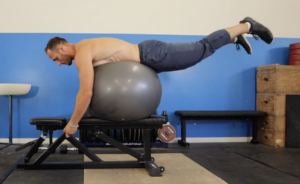
2. Stability Ball Reverse Hypers
Place your stomach on a stability ball and your hands on the floor in front of you. This variation adds an element of core stability, as you must balance on the ball while driving your legs into extension.
3. Glute-Ham Raises (GHR)
While the movement pattern is slightly different, the GHR is perhaps the best alternative for building the same “posterior chain armor.” It emphasizes the hamstrings’ role in both hip extension and knee flexion.
Incorporating Into Your Program
The posterior chain can handle a lot of volume, but because these movements involve the lower back, quality is paramount.
- As a Finisher: Perform 3 sets of 15–20 reps at the end of a lower body session to “pump” the glutes and lower back with blood and finish the workout with high metabolic stress.
- As Prehab: Use lighter versions (like the stability ball variation) as part of your warm-up to “wake up” the glutes before heavy squats or deadlifts.
Build Your Engine
Elite performance is built from the back. If you’re ready to stop guess-working your accessory training, join a program that plans every detail for you.
- Built for Athletics: Designed to maximize strength, power, and movement efficiency.
- Sustainable Strength: High-performance training for the long haul.
Watch the Full Guide
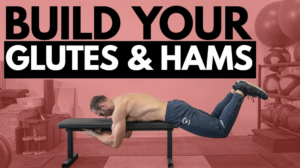
Ready to see these variations and cues in action? Check out the full breakdown on our YouTube channel here.