

The face pull is a staple in many strength programs for good reason. It’s an elite exercise for strengthening the upper back, targeting the rear deltoids, traps, and rotator cuff muscles. However, most people perform them in a way that limits their effectiveness or causes unnecessary frustration.
At Citizen Athletics, we focus on technical precision to help you move and perform like an athlete. Here is how to optimize your face pull setup to get the most out of every rep.
Want to take your training up a notch?
Use promo code SAVE10 to get 10% off any program right now. https://citizenathletics.com
Learn more about our training at the bottom.
The “Double Band” Hack
If you’re training at home or in a gym without a cable machine, you likely use a resistance band. A common issue with single-band face pulls is that the band inevitably hits you in the face as you reach the peak of the movement.
- The Fix: Loop a second band through your main anchored band. This creates two independent handles, mimicking the rope attachment on a cable machine.
- The Benefit: This setup allows you to pull the bands apart laterally as you pull back, combining a face pull with a band pull-apart. This significantly increases the challenge to your upper back and rear delts.
Adjusting Anchor Height for Specific Goals
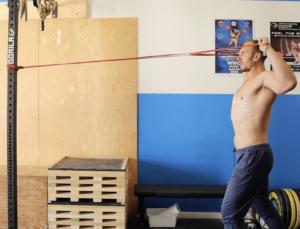
The height of your anchor point changes which muscles are being prioritized. You can adjust the anchor based on your specific “weak links”:
- High Anchor (Above Head): This variation, often called a high-to-low face pull, increases the demand on your lower traps and other scapular muscles that help depress your shoulder blades.
- Eye Level Anchor: This is the traditional face pull position. It places a heavy emphasis on horizontal abduction, making it a great choice for targeting the rear deltoids, mid-traps, and rhomboids.
- Chest Level Anchor: This is our preferred “all-around” height. It forces you into more external rotation (rotating the hands back and up) while still challenging the rear delts. This is ideal for strengthening the rotator cuff muscles like the infraspinatus and teres minor.
Perfecting the Technique
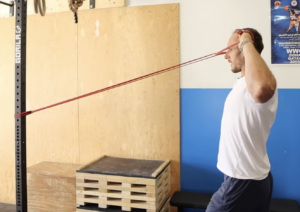
- The Path: Pull the band toward your forehead, not your chin.
- The Finish: Your elbows should be high and back, and your hands should be outside your ears.
- The Intent: Focus on “ripping” the band apart throughout the entire motion. This ensures your upper back stays engaged and you don’t rely solely on your biceps to pull the weight.
Built for Longevity
Prehab movements like the face pull are what allow you to keep training heavy and staying athletic as you age. Our programs integrate these “health” movements with high-performance strength training for a complete package.
- Built for Athletics: Master the strength and power required for elite performance.
- Sustainable Strength: High-performance training designed to keep you moving well for life.
Watch the Full Tutorial
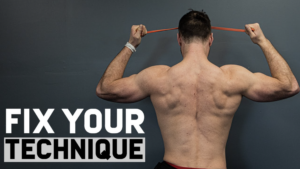
See the exact “band hack” and anchor height comparisons in action here.