

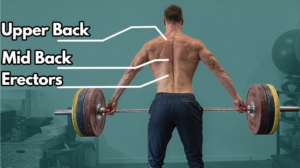
The snatch grip deadlift is a specialized variation of the deadlift that targets the glutes, hamstrings, upper back, and lower back. What makes this movement unique, however, is its ability to challenge the upper back muscles to a degree that other deadlift variations often miss.
At Citizen Athletics, we utilize this movement to help athletes develop total-body pulling power and mid-back thickness. Here is everything you need to know about mastering the snatch grip deadlift.
Want to take your training up a notch?
Use promo code SAVE10 to get 10% off any program right now. https://citizenathletics.com
Learn more about our training at the bottom.
What is a Snatch Grip?
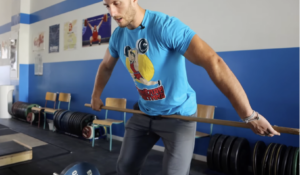
It’s more than just a “wide grip.” To find your ideal snatch grip width, hold a stick or PVC pipe at your hip crease while standing upright.
- The Hip Crease Rule: Your grip should be wide enough so that the bar rests exactly in your hip crease, above your pubic bone and below your ASIS (the bony points on the front of your hips).
- The “Junk” Buffer: If the bar is hitting bone, your grip is likely either too wide or too narrow. Finding this specific spot ensures a comfortable and efficient pull.
Perfecting the Technique
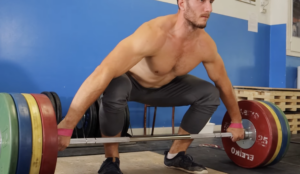
Because your grip is wider, you must start in a deeper, more “squatty” position than a conventional deadlift.
- The Stance: Take a slightly wider-than-normal foot position and toe out slightly. This creates space for your knees to drive out, allowing you to maintain a better torso angle and use more “leg drive”.
- Upper Back Engagement: Before you pull, think about “sweeping” the bar back toward you. This engages your lats and upper back muscles from the very start.
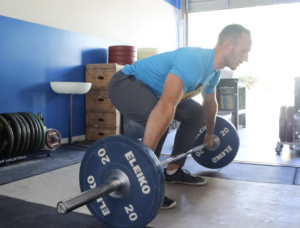
- The Pull: Push into the floor and try to have your chest and hips rise together. As the bar passes your knees, continue sweeping it back to stay tight to your body.
- The Lockout: Finish by extending your hips, not by leaning back. Think about doing a “mini crunch” at the top to keep your spine neutral and prevent hyperextension.
When to Use This Movement
- As a Supplementary Lift: For most powerlifters and general athletes, the snatch grip deadlift is best used as an accessory movement after primary squats or deadlifts to add volume to the upper back and glutes.
- For Specificity: If you are a weightlifter, this is a essential drill to build strength in the specific positions required for the snatch.
A Note on Straps: This exercise is primarily for back and glute development, not grip training. If your forearms are preventing you from loading your legs or back properly, do not hesitate to use straps.
Variations for Every Level
- Off Blocks: If you struggle to maintain a flat back when pulling from the floor, use blocks to raise the bar slightly. This allows you to load the upper back even heavier through the strongest part of the range.
- Snatch Grip Romanian Deadlift (RDL): Start from the top and lower the bar only to your knees. This is a great way to isolate the hamstrings and lockout muscles.
- The Hover Deadlift: This is a high tension variation where you perform a full range rep but never let the weight touch the floor between reps. It keeps the muscles under constant tension and is extremely challenging.
Built for Athletics
Mastering the nuances of the deadlift is the first step toward elite strength. Our programs are built on these exact scientific principles.
- Built for Athletics: Designed to maximize strength, power, and movement efficiency through professional level programming.
- Sustainable Strength: The perfect flagship program for busy people who want to perform like athletes for life.
Watch the Full Guide
See the specific cues for finding your hip crease and mastering the bar sweep in our full video here.