

Mastering the pull-up, or increasing your max reps, isn’t just about doing more pull-ups. Success is heavily dependent on your total muscle mass and the strength of several key “supporting” muscle groups across your upper body and trunk. While the lats are the primary movers, the biceps, forearms, traps, and even your abdominals all play critical roles in the movement.
At Citizen Athletics, we’ve analyzed the research to determine which accessory exercises actually translate to pull-up performance. These exercises focus in on challenging the primary working muscles, and assistive support muscles that allow you to pull your body from the dead hang to chin clear over the bar.
Want to take your training up a notch?
Use promo code SAVE10 to get 10% any program right now. https://citizenathletics.com
Learn more about our training at the bottom.
Identifying your specific ‘weak link’ is the first step toward elite pulling power. Whether you struggle with grip fatigue, core stability, or scapular control, adding targeted volume to those areas will translate directly to your performance on the bar. For some individuals, this might mean doing additional pulling work to target their lats or upper back muscles. For others, it may be better to do isolated work for the arms or core. To help you best with this, here are the six best accessory exercises for improving your pull ups, helping to strengthen your weak links.
To maximize your potential, pick one or two of these targeted movements to perform after your primary pull-up work:
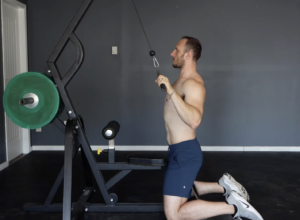
- Kneeling Lat Pull-Downs.
The seated lat pull-down is the most common accessory for pull-ups, but studies show it doesn’t correlate as highly with pull-up performance as you might think. The main reason is the core: in a seated pull-down, your legs are locked under pads, which removes the need for trunk stability.
By kneeling, you lose the advantage of the seat and must fight to keep your spine from extending. This forces your anterior abdominal muscles to work harder, mimicking the exact core activation pattern required for a strict pull-up.
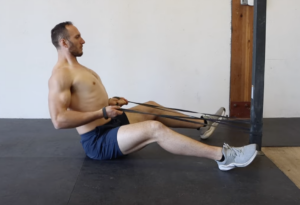
2. Close Grip Row (with a slight lean back).
Typically vertical pulling is the focus of a pull-up, but the Close Grip Row is a powerhouse accessory because it complements the pull-up’s specific movement pattern. By adding a slight lean back, you change the pulling angle to provide a peak challenge for the lats specifically in shoulder extension. This helps bridge the gap between horizontal and vertical pulling strength.
Furthermore, this variation is excellent for strengthening the thoracic spine, the region where your ribs attach. Developing strength and control in this area is vital for maintaining a proud chest and “active” shoulders during a pull-up. This prevents the common “caving” of the chest, encouraging better technique and ensuring your lats, rather than just your arms, stay the primary movers throughout the entire range of motion.
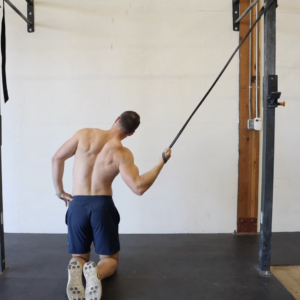
3. Kneeling Side-Bent Lat Pull-In.
While the pull-up is a bilateral movement, the Kneeling Side-Bent Lat Pull-In is a highly effective unilateral accessory that allows you to isolate and address imbalances. By pulling from a side-bent position, you place a heavy emphasis on shoulder adduction, pulling the arm down toward the midline of the body, which is a primary function of the lats during the initial phase of a pull-up. This focused angle allows for a superior “mind-muscle connection” to maximize lat activation that often gets lost in two-handed movements.
The kneeling position combined with the lateral mechanics adds a significant stability challenge. Because the weight is pulling you toward one side, your trunk must stay active to prevent you from tipping or rotating. This encourages the core to stay fully incorporated during the pulling action, strengthening your ability to remain “rigid” and controlled under the bar.
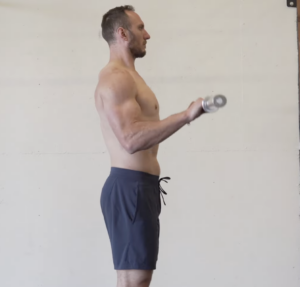
4. Reverse Curls
Often people think of bicep curls purely as just an exercise for aesthetics, chasing an arm pump and growth. However, when used appropriately, they can help support targeted strength development to boost your pulling power. As well, flipping your hands to a pronated (palms down) grip fundamentally changes the mechanics of the lift. This simple shift significantly increases the activation of the brachioradialis, a powerful muscle in the forearm that assists with elbow flexion. Because strict pull-ups are performed with an overhand grip, standard bicep curls often fail to target the specific forearm and grip strength required to stay connected to the bar
By incorporating Reverse Curls, you build the specific forearm strength needed to maintain a strong hook on the bar during the most challenging phases of the pull. Strengthening the brachioradialis ensures that your grip isn’t the “weak link” that gives out before your lats have reached their full potential, allowing for more consistent, high-quality repetitions.
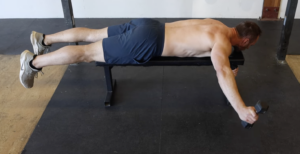
5. Prone Shoulder Horizontal Abduction (at 90° and 120°)
A common bottleneck in pull-up progress isn’t just a lack of raw pulling power, but a lack of scapular stability and strength. This exercise allows you to reinforce the small but vital muscles that keep your shoulders healthy and your pull-up path efficient. By raising your arms to 90 degrees with an external rotation, you specifically target the infraspinatusand middle deltoid, which help stabilize the shoulder joint under load.
Taking the movement further by raising your arms to 120 degrees (forming a “Y” shape) is one of the most effective ways to isolate the lower trapezius. This muscle acts as a functional anchor for your shoulder blades; without a strong lower trap, your shoulders tend to shrug toward your ears at the bottom of a rep, leading to “power leakage” and inefficient movement. Mastering these angles ensures your upper back provides a rigid, stable foundation for every pull.
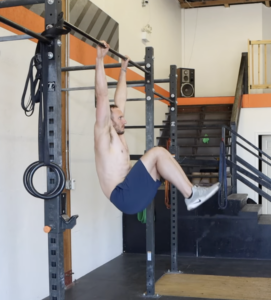
6. Hanging Knee Raises or Hanging Leg Raises
While many see this as just an “ab” exercise, its true value for the pull-up lies in isometric trunk stability. During a strict pull-up, your core must work to resist extension, essentially preventing your back from arching and your legs from swinging out of control. By performing Hanging Knee or Leg Raises, you train your rectus abdominis and obliques to manage this load under tension while simultaneously improving your hanging grip strength.
This dual-purpose movement ensures that your trunk remains a rigid, stable pillar. When your core is locked in, every ounce of force generated by your lats goes directly into moving your body upward, rather than being dissipated through a “leaky” or unstable midline.
Build Elite Pulling Power
The secret to better pull-ups is identifying your specific weak link, whether it’s grip, core, or upper back, and attacking it with intent.
- Built for Athletics: Our premier program designed to build the total-body strength, power, and movement efficiency required for high-level performance.
- Sustainable Strength: The perfect flagship program for busy people who want to perform like athletes and master the fundamentals for life.
Watch the Science-Based Breakdown
Want to see the research and the exact form for these accessory movements? Watch the full video here.