

The dumbbell pullover is a classic exercise that doesn’t get enough credit in modern programming. It’s an incredibly versatile movement that strengthens the shoulders, develops end range mobility, and targets the pecs, lats, triceps, and teres major.
At Citizen Athletics, we use the pullover to bridge the gap between strength and flexibility. Here is how to master the technique and adjust it to your specific goals.
Want to take your training up a notch?
Use promo code SAVE10 to get 10% off any program right now. https://citizenathletics.com
Learn more about our training at the bottom.
On-Bench vs. Off-Bench: Which is Better?
You’ll typically see the pullover performed in two ways:
- On-Bench (Traditional): You lie flat along the length of the bench. This is the most stable version and is great for focusing purely on the upper body pull.
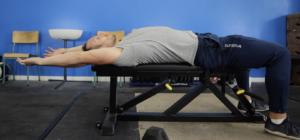
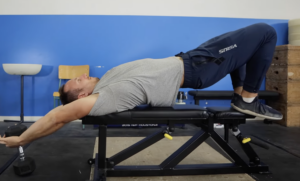
- Off-Bench (Perpendicular): You rest only your upper back/shoulder blades on the bench, with your body forming a bridge.
- The Advantage: This version requires much more core and hip stability. Because your lower body isn’t supported, you have to actively engage your glutes and abs to maintain a straight line from your knees to your shoulders.
Perfecting the Technique
Regardless of the version you choose, the foundational cues remain the same:
- The Grip: Hold one end of the dumbbell with both hands, overlapping your thumbs and fingers around the handle.
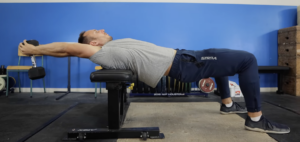
- The “Hollow Body” Cue: Lock your ribs down and squeeze your glutes. Avoid letting your ribs “pop” or your lower back arch excessively as the weight goes overhead.
- The Reach: As you lower the weight, think about reaching your arms away from you. This creates space in the shoulder joint and maximizes lat and serratus anterior engagement.
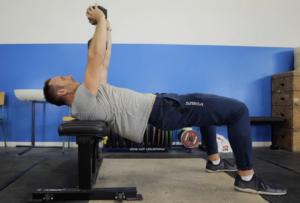
- Elbow Position: Keep your elbows pointed toward the ceiling rather than flaring them out to the sides. This is generally more comfortable and keeps the tension where we want it.
Customizing for Chest or Lats
You can bias the exercise to target different muscle groups by slightly adjusting your range of motion:
- For the Chest (Pecs): Focus on the top half of the range. Research shows the pecs are highly active in the initial phase of the pull from the overhead position back to the chest.
- For the Lats: Focus on the deep stretch at the bottom. To maximize the lat challenge, utilize a bridge position to get even more range of motion, and think about pulling from the elbows rather than the hands.
Built for Athletics
Mastering the pullover is about more than just muscle; it’s about building a resilient, mobile upper body.
- Built for Athletics: Our premier program for maximizing raw strength, power, and movement efficiency.
- Sustainable Strength: High-performance training designed to keep you performing like an athlete for life.
Watch the Technical Breakdown
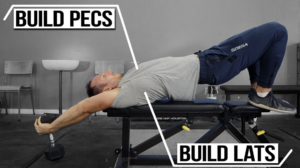
Ready to see the difference between a chest biased and lat biased pullover? Watch our full guide for the exact cues and setups here.