

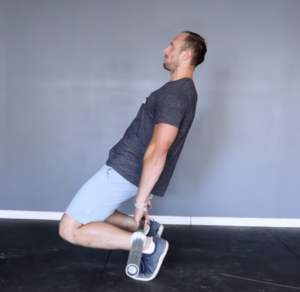
The sissy squat is a fantastic, versatile movement that builds strong quadriceps, creates robust and resilient knees, and develops a stronger core.
While the standard sissy squat is an incredible tool, many lifters reach a point where bodyweight repetitions are no longer sufficiently challenging. If you are ready to progress the exercise, you can implement specific variations using dumbbells, kettlebells, bands, and barbells to increase the loading and maximize your results.
Want to take your training up a notch?
Use promo code SAVE10 to get 10% off any program right now. https://citizenathletics.com
Learn more about our training at the bottom.
Hand-Supported Free Weight Progressions
Sissy squats can be a fantastic option for loading your quads, but you need to consider stability. The classic sissy squat is done standing without any support and this demands a high balance to not fall over. For most people, this will result in holding back from pushing the lift as hard, limiting your stimulus. As such, you’ll see these variations often have support to eliminate that issue.
1. One-Dumbbell Hand-Supported Sissy Squat
Hold a single dumbbell down by your side in one hand while using your opposite hand on a fixed structure for balance. If you are training at home without gym equipment, you can swap the dumbbell for a backpack or a water jug. It is best to start light to get comfortable with the loaded pattern, though proficient lifters can work up significantly heavier, even using a 24-kilogram kettlebell.
Training Consideration: Holding a weight on only one side causes you to resist rotation, meaning the leg on the loaded side works slightly harder. To distribute the stimulus evenly, either split your sets by swapping hands halfway through your repetitions, or alternate the loaded hand from one set to the next.
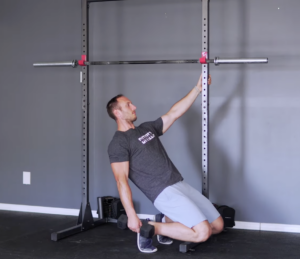
2. One-Arm Rack Hand-Supported Sissy Squat
Set up identically to the previous version, but clean the dumbbell or kettlebell up to your chest into a one-arm rack position. Bringing the weight higher up the body moves it further away from your joint axis point. This increases the mechanical moment arm, making the exact same weight feel significantly heavier and more challenging than holding it at your side.
Training Consideration: Holding the weight over the center of your chest helps distribute the load more evenly between both legs. However, this higher rack position demands a massive amount of trunk and core stability. If your trunk becomes the limiting factor and you want to focus strictly on exhausting your legs, the dumbbell-at-the-side variation may be a better choice.
Cable, Band, and Landmine Progressions
Using alternative resistance profiles allows you to alter the tension arc or shift your physical leverages:
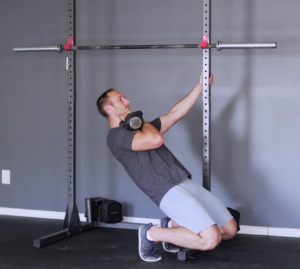
3. Band-Supported Sissy Squat
Step onto a long resistance band, positioning it securely under the balls of your feet. Loop the other end up in front of your shoulders and rest it behind your neck. Because a band stretches, it provides maximum tension at the top of the repetition and tapers off at the bottom. This acts as an excellent bridge for lifters who are not yet comfortable managing heavy, fixed loads at deep knee angles.
Safety Hazard: Ensure the band rests behind your neck and in front of your shoulders. Never run the band across the front of your neck, as it creates an immediate choking hazard as you descend.
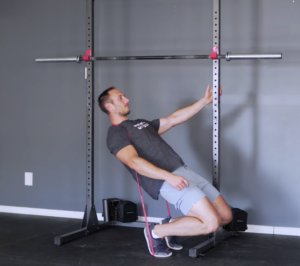
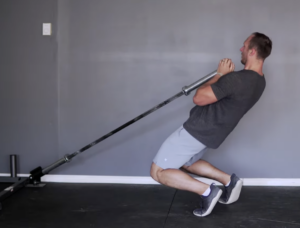
4. Landmine Sissy Squat (Facing Anchor Point)
Anchor a barbell into a low landmine attachment and hold the end of the bar at your chest using a goblet grip, facing directly toward the anchor point.
- Leverage Positioning: If you stand further back from the anchor, the landmine barbell serves primarily as a core-challenging hand support rather than direct resistance. However, as you move your feet closer toward the anchor point, your knees will drift forward and your torso will lean back significantly, dramatically increasing the resistance load. This version places extreme demands on your core and trunk. If your core is struggling or you want to emphasize pure leg drive, you can allow your hips to bend slightly to turn the movement into a heel-elevated goblet squat.
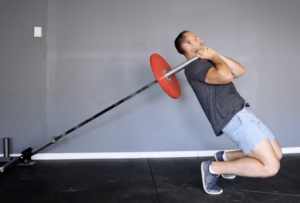
5. Landmine Sissy Squat (Back Facing Anchor Point)
Flip your positioning around so your back faces the landmine anchor point, resting the end of the barbell over one shoulder. To make this comfortable, place a weight plate on the bar to provide a flat surface for your shoulder to push against. Altering your foot distance dictates the focus: standing close heavily challenges the core, while walking your feet out places an intense emphasis on the quads. You can modify this by letting your hips bend or keeping your feet flat on the ground to transform it into a hack squat setup.
Unilateral and Advanced Bodyweight Progressions
If you want an extreme challenge without adding external weight, you can transition into single-leg variations:
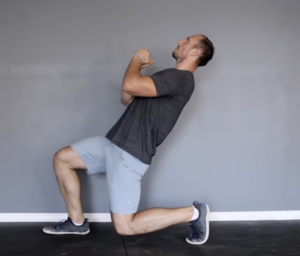
6. Split-Squat Sissy Squat
Assume a slightly elongated split-squat stance. Keeping your front leg in place for stability and support, lean your torso back and drive your rear knee toward the floor in a sissy squat motion. This targets a single leg with high mechanical tension without needing extra gear. If you choose to add weight later, you can hold a dumbbell at your side or up at your chest.
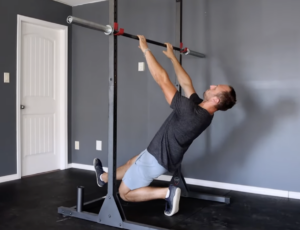
7. Single-Leg Sissy Squat
Lift one leg completely off the floor to perform a true one-legged sissy squat. Using a hand support is critical for this variation; without it, your coordination and balance will break down before your legs can receive a significant training stimulus.
- Eccentric Progression: The hand support allows you to perform advanced eccentric training. You can lower yourself down under complete control using just your single leg, then use your hand to assist you on the upward (concentric) phase if you get stuck at the bottom. External weight is rarely necessary, but advanced lifters can add load if needed.
The Ultimate Freestanding Progression
8. Barbell Sissy Squat
Most advanced variations require a hand support to accommodate heavy loading and remove the balance barrier. However, if you want to maximize both balance and load simultaneously, a style popularized by bodybuilder Julian Smith, you can perform a freestanding barbell sissy squat. Hold a barbell in your hands directly behind your back and lower yourself into a full sissy squat. The balance demand is exceptionally high; you should get strong and comfortable with the previous variations before attempting this elite lift.
Move, Lift, and Perform Like an Athlete
Building massive quad development and ironclad joint resilience requires moving past basic bodyweight exercises into structured, progressive overloads. Eliminate the guesswork from your leg days and follow an elite training blueprint engineered by sports performance professionals:
- Built for Athletics: Our premium training system engineered to optimize raw strength, power, and high-level movement efficiency.
- Sustainable Strength: The ultimate flagship framework designed for busy individuals looking to lift heavy, build muscle, and remain highly athletic for life.
Watch the Full Technical Breakdown
To see the exact body positioning, landmine angles, and single-leg eccentric control in action, watch our complete video guide here.