

Overhead pressing is one of the absolute best ways to build a set of strong, desirable shoulders. While movements like push-ups and bench presses are great for overall pressing power, the overhead press takes it a step further by engaging the lateral deltoids to a much higher degree.
However, many people avoid this movement. Whether it’s due to a limited range of motion, general discomfort, or a history of shoulder pain, the strict overhead press can be demanding. It requires significant mobility in both the shoulders and the upper back. For many, the “bottom” position of the press is where the most discomfort occurs.
Here is the good news: **unless you are a competitive weightlifter or CrossFit athlete, you don’t have to strict press.**You can reap all the muscle-building benefits of the overhead press by using variations that bypass discomfort and high positional demands.
In collaboration with personal trainer Andrew Coates, we’ve broken these variations into two categories: Altered Angles and Unilateral Movements with a Twist.
Want to take your training up a notch?
Use promo code SAVE10 to get 10% any program right now. https://citizenathletics.com
Learn more about our training at the bottom.
Category 1: Altered Angle Variations
These exercises are perfect for those who struggle to get their arms fully locked out directly overhead due to mobility restrictions.
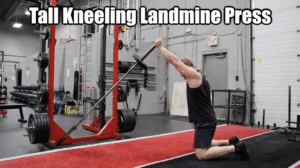
1. Tall Kneeling Landmine Press
The landmine setup (a barbell fixed in a corner or a floor attachment) creates an arcing motion. You start pressing nearly vertically and finish in a more horizontal position. The tall kneeling position forces you to engage your core while taking some of the stress off the lower back.
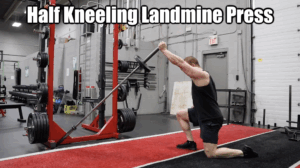
2. Half-Kneeling Landmine Press
Similar to the tall kneeling version, but by placing one foot forward, you increase your stability. This allow you to handle more weight while further reducing the demand on your trunk.
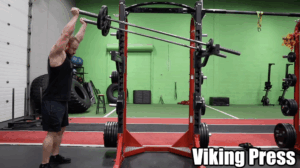
3. The Viking Press
If you want to stay more vertical but still need an angled path, the Viking press is the answer. By setting the barbells higher, you get a more vertical inclination. This can be done with one or two barbells depending on your equipment.
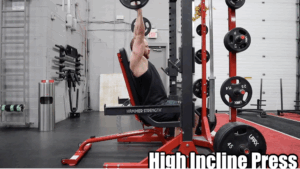
4. High Incline Press
Set an adjustable bench to a 75-to-80-degree angle. The back support provides stability, and the slight incline means you don’t need 100% full shoulder flexion to finish the movement, making it much friendlier on the joints.
Category 2: Unilateral Movements (With a Twist)
If you have the range of motion to go overhead but find the bottom of the lift uncomfortable, these one-armed variations are excellent for working around “sticky” or painful spots.
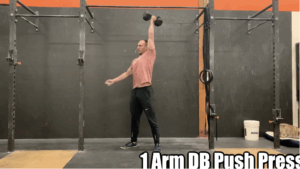
5. One-Arm Dumbbell Push Press
By using your legs to “kickstart” the weight, you reduce the demand on the shoulder at the bottom; the most vulnerable position. This turns the press into a powerful full-body exercise.
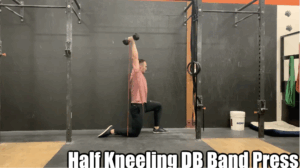
6. Half-Kneeling Band Press
The beauty of resistance bands is “accommodating resistance.” The movement is easiest at the bottom (where the band is least stretched) and gets harder as you reach the top. This protects the shoulder where it’s weakest and challenges it where it’s strongest.
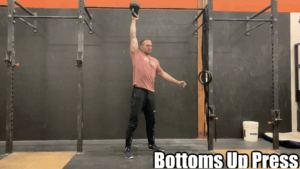
7. One-Arm Bottoms-Up Kettlebell Press
This is the ultimate stability builder. Holding a kettlebell upside down forces your rotator cuff to work overtime to stabilize the weight. Because the stability demand is so high, you’ll use less weight while still getting a massive training effect.
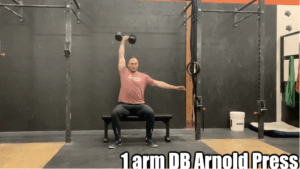
8. Seated One-Arm Arnold Press
The Arnold press involves rotating your palm from facing you (at the bottom) to facing away (at the top). This rotation allows the shoulder to move through a natural path, helping many lifters “rotate around” the impingement or discomfort they feel during a fixed-grip press.
Conclusion
Don’t let shoulder discomfort stop your progress. By altering the angle or switching to unilateral work, you can keep your shoulders healthy while still building impressive strength.
If you’re looking for more help with shoulder rehab or want a program with built-in variations like these, check out our Sustainable Strength or Built For Athletics programs at Citizen Athletics.
Watch the Full Video
Click here for the full Youtube video on this topic.