


When designing a training program to support a lean bulk, your objective is to maximize muscle hypertrophy while minimizing fat gain. Doing this successfully requires structuring your training around key scientific variables: rep ranges, intensity, volume, frequency, and smart exercise selection.
Want to take your training up a notch?
Use promo code SAVE10 to get 10% off any program right now. https://citizenathletics.com
Learn more about our training at the bottom.
Variable 1: Mix Your Rep Ranges
Mechanical tension serves as the primary driver of muscle growth. However, structuring your training week around a wide variety of rep ranges is highly valuable to ensure you stimulate a broad spectrum of muscle fibers.
- Low Reps (3 to 6 Reps): Prioritize these during your heavy compound lifts to maximize strength adaptations.
- Moderate Reps (5 to 10 Reps): Use this mid-range to accumulate training volume and establish substantial mechanical tension without relying entirely on maximum weight intensities.
- High Reps (10+ Reps): Incorporate higher volume work to capture additional muscle growth triggered by metabolic factors.
Variable 2: Manage Relative Intensity (RIR & RPE)
The success of your rep ranges comes down to your relative training effort per set, which can be measured using Reps in Reserve (RIR) or the Rate of Perceived Exertion (RPE).
- The Hypertrophy Threshold: To truly stimulate muscle growth, research indicates you want to train at a minimum threshold of 0 to 5 Reps in Reserve (RIR). If a set is too easy and you finish far away from failure, you receive very little hypertrophy benefit.
- The Sweet Spot: For the majority of your working sets, aim for 2 to 3 RIR (or an RPE 7 to 8). This range allows you to train relatively hard without generating so much neurological fatigue that you struggle to repeat the effort or accumulate sufficient volume.
- Training to Failure: You do not need to burn out or hit absolute failure on every single set. Doing so makes it difficult to maintain volume. A highly effective strategy is to push only the final set of an exercise to complete failure. This ensures you maximize growth potential at the end of the movement and provides an accurate baseline of what your true RIR looks like.
Variable 3: Hit a Baseline Training Volume
Achieving a sufficient amount of volume is mandatory for expanding muscle size. While individual recovery factors and experimentation dictate your personal ceiling, research points to clear baselines:
- The Minimum Target: Aim for at least 8 sets per major muscle group, per week (such as 8 weekly sets of pressing movements). Restricting your weekly volume to only 4 sets leaves a significant amount of potential growth on the table.
- The Upper Limit: You can scale volume upward between 8 to 16, or even 20 sets per week based on your response. However, keep in mind what you can recover from. Pushing past your own unique maximum recovery capacity sets you up for excess fatigue which will decline your long term hypertrophy.
Variable 4: Increase Training Frequency to Limit Fat Gain
Training frequency refers to how many times you hit a major muscle group across the training week.
- The Hypertrophy Standard: The literature demonstrates that stimulating each major muscle group at least two times per week is highly valuable for maximizing muscle growth compared to a traditional once-a-week body-part split.
- The Lean Bulk Advantage: While increasing your frequency past two days a week doesn’t inherently trigger more muscle growth, it offers a specific advantage for a lean bulk. When comparing a 3-day frequency to a 2-day frequency per week, research shows the same level of muscle growth but with significantly less fat mass gained. Spreading your volume across a higher frequency helps mitigate fat accumulation.
Variable 5: Compound Movements & Isolation Fillers
Structure your exercises by prioritizing massive compound lifts, then utilizing isolated accessories to map out any missing gaps.
The 4 Compound Categories
Compound exercises involve multiple joints and muscle groups working simultaneously:
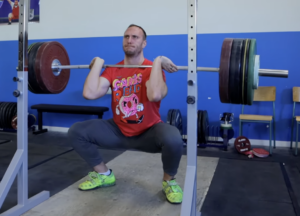
- Squats (Knee Dominant): Primarily tax the quads and the adductor magnus.
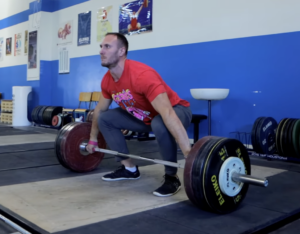
- Hinges (Hip Dominant): Focus on the glutes, hamstrings, and lower back.
- Presses: Target the pecs, anterior deltoids, and triceps.
- Pulls: Recruit the lats, mid-back, and biceps.
Filling the Gaps with Isolation Work
Compound lifts do not maximize every muscle group across their entire profile. Use isolation sets to target areas left under-stimulated:
- Shoulders & Arms: The lateral deltoids and rear deltoids do not get fully taxed during standard compound presses and pulls. Similarly, the biceps are not maximized to the same degree as the triceps during pressing work, making direct bicep curls highly valuable.
- Hamstrings: While hinges recruit the hamstrings, they do not maximize the muscle across its entire length. Incorporating a dedicated knee-flexion movement (like a leg curl) at least once a week is highly beneficial.
- Calves & Core: Dedicate time to calves, adductors, and abs based on your personal time availability and goals.

Move, Lift, and Perform Like an Athlete
Structuring a lean bulk requires balancing precise training volume, frequency, and evidence-based overloads to ensure your weight gain is pure muscle tissue. Take the guesswork out of your physique goals and follow a high-performance roadmap built by professionals:
- Built for Athletics: Our premium training system engineered to optimize raw strength, power, and high-level movement efficiency.
- Sustainable Strength: The ultimate flagship framework designed for busy individuals looking to lift heavy, build muscle, and remain highly athletic for life.
Watch the Full Technical Breakdown
To see our full day of training, the RIR execution, and more details on building out a lean bulk program, check out the complete video guide here.